

Washington, October 16, 2026 (Yes Punjab News)
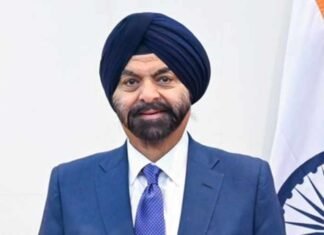
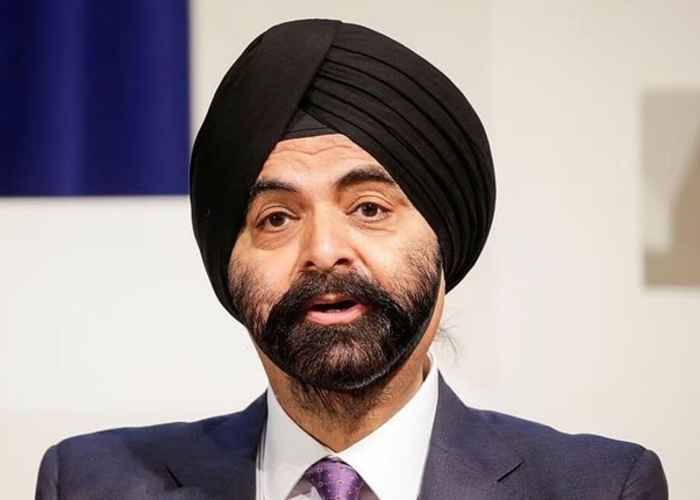
India has emerged as one of the leading sources of private capital mobilised by the World Bank Group, alongside the United States and the United Kingdom, World Bank President Ajay Banga has said, outlining plans to expand the institution’s critical minerals business fivefold over the next five years.
Addressing the World Bank Annual Meeting plenary in Bangkok, Banga said the institution mobilised capital from investors in 110 countries last year, with the three countries leading contributions.
“Last year, we mobilised capital from investors in 110 countries. The United States, United Kingdom, and India led the way,” he said.
Banga said private capital mobilisation had risen more than threefold, from approximately $35 billion in fiscal 2022 to $112 billion last year. Including the World Bank Group’s own financing, total financing exceeded $230 billion, reflecting efforts to combine public resources with private investment for development projects.
He said mobilisation had nearly tripled in lower-middle-income countries, quadrupled in upper-middle-income economies and more than doubled across Africa. However, private capital mobilisation in low-income countries remained around $3 billion, underscoring the challenges of attracting commercial investment to the poorest economies.
Banga also announced plans to scale up the World Bank’s work in critical minerals, which are increasingly important for manufacturing, infrastructure and emerging technologies.
“In critical minerals, we plan to quintuple our business in five years,” he said.
The institution has launched its first country compacts with multilateral development bank partners to help developing economies build domestic industries and capture a greater share of the value generated by their mineral resources. Banga said 20 countries had been identified as potential partners.
The initiative aims to move beyond mineral extraction and support local processing, industrial development, value addition and job creation in resource-producing countries.
Banga linked the strategy to a broader employment challenge facing the global economy. An estimated 1.2 billion young people are expected to enter the labour market over the next 10 to 15 years, while only around 400 million jobs are projected to become available, potentially leaving a gap of 800 million jobs.
“The jobs gap is a projection. It does not have to be our future,” he said.
To address the challenge, Banga said the World Bank was combining infrastructure investment, regulatory reforms and financial instruments intended to reduce risks for private investors. The institution committed $40 billion last year to infrastructure, healthcare, education and skills development, while 30 per cent of its public-sector financing supported policy and institutional reforms.
He added that six multilateral development banks were working on common standards to assess, package and transfer investments to institutional investors, potentially freeing up capital for new development projects.
 FOLLOW NOW