
Jaipur, August 17, 2026 (Yes Punjab News)
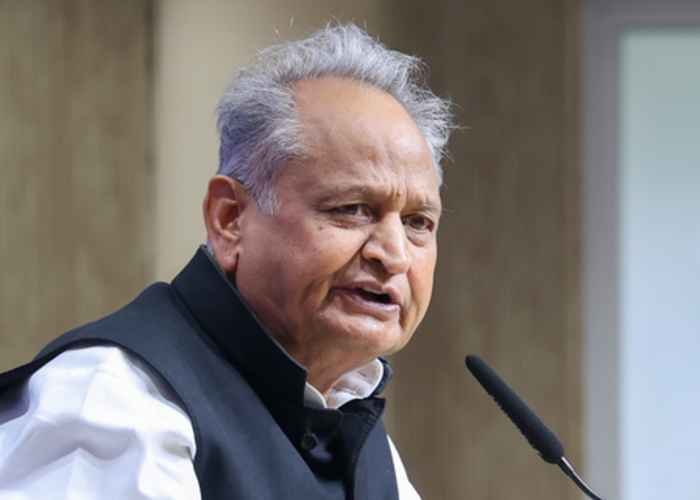
A political controversy over Vande Mataram intensified in Rajasthan on Monday, with former Chief Minister and senior Congress leader Ashok Gehlot hitting back at Union Home Minister Amit Shah and highlighting the Congress’ association with the song during India’s freedom struggle.
The exchange followed Shah’s remarks at a gathering in Chittorgarh on Sunday, where he criticised the Congress over an alleged incident involving Vande Mataram at the party’s Delhi headquarters during an Independence Day programme.
Shah alleged that Congress Parliamentary Party chairperson Sonia Gandhi had signalled Congress president Mallikarjun Kharge to stop the song while it was being sung. He accused the Congress of appeasement and vote-bank politics and demanded an apology over what he described as an attempt to erase Vande Mataram from the history of the freedom movement.
Responding on social media, Gehlot said historians would find Shah’s claims about the song “laughable”. He accused the BJP and RSS of attempting to rewrite the history of the freedom struggle after coming to power and argued that political speeches or proposed legislation could not alter historical facts.
“The ‘wisdom’ shared by Amit Shah in Chittorgarh reflects his guilt,” Gehlot said, alleging that the BJP and RSS were invoking Vande Mataram despite what he described as their absence from important phases of the freedom movement.
Gehlot pointed to the Congress’ historical association with the song, noting that Rabindranath Tagore sang Vande Mataram at the 1896 Calcutta session of the Indian National Congress. He said the song subsequently became a regular feature of Congress sessions and a rallying cry for freedom fighters facing arrests, lathi-charges and other British repression.
He also cited the Congress’ 1937 decision to use the first two stanzas of the composition at public functions, arguing that the move was intended to make the song acceptable across religious communities.
Gehlot questioned the RSS’ role between its formation in 1925 and Independence in 1947. He claimed the organisation did not adopt Vande Mataram as its official song during the freedom struggle, instead using its own prayer, “Namaste Sada Vatsale”, and alleged that it stayed away from the Quit India Movement of 1942.
Written by Bankim Chandra Chattopadhyay and later incorporated into his novel Anandamath, Vande Mataram became a prominent symbol of India’s freedom struggle. Its later verses, however, generated controversy over their religious imagery.
Following the 1937 provincial elections, the Congress adopted the first two stanzas for public use amid concerns over the acceptability of the complete composition among different religious communities.
On January 24, 1950, Constituent Assembly President Rajendra Prasad announced that Jana Gana Mana would be India’s National Anthem, while Vande Mataram would be accorded the status of National Song and receive comparable respect.
The song has remained a point of political contention, with the BJP and Sangh Parivar frequently criticising the 1937 Congress decision as appeasement, while the Congress has defended it as an effort to promote inclusiveness and national unity.
The latest Shah-Gehlot exchange has consequently revived a broader political dispute over the history of the freedom movement and competing claims to its legacy.
 FOLLOW NOW