

Madrid, August 8, 2026 (Yes Punjab News)
Spain has introduced document checks for passengers arriving from Italy, with the measures set to remain in place until September 7, local media reported.
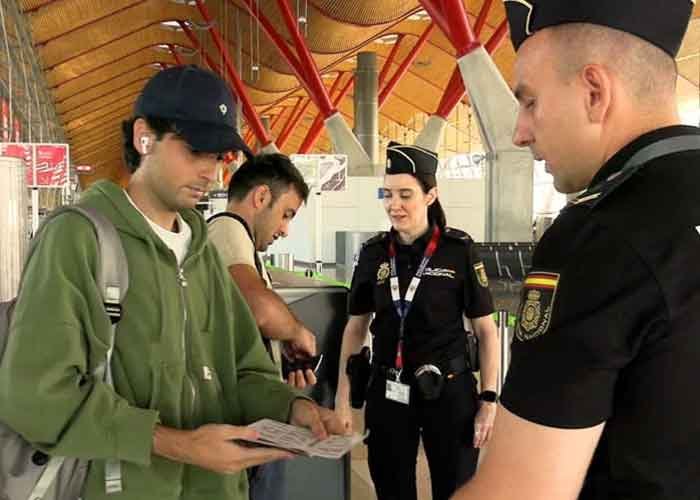
Around 100 National Police Corps officers have been deployed at Spanish ports and airports to conduct the checks. According to El Pais, two to four officers are assigned to each flight and randomly check between 5 and 10 per cent of passengers, translating to roughly 15 travellers on medium-sized aircraft and about 25 on larger planes.
The checks began after midnight at Madrid-Barajas and Barcelona-El Prat airports before being extended to Seville, Malaga, Bilbao, Alicante and Valencia. The measures are also expected to cover the Balearic and Canary Islands.
Italian airports particularly affected include Rome’s Fiumicino and Ciampino airports, Milan Malpensa, Naples, Venice and Florence, according to Italian news agency Adnkronos.
The Spanish government said the move followed Italy’s unilateral decision to reintroduce border checks on travellers arriving from Spain from August 1 without prior notification. Madrid described the Italian measures as “unjustified, discriminatory and contrary to the interests of the European Union” and called for their immediate withdrawal.
Italy, meanwhile, said on Friday that it would continue temporary checks on third-country nationals arriving from Spain until at least August 15, citing national security and border-management concerns.
The Italian government said it would not accept “ultimatums or external pressure” on national security and border management. It also clarified that the checks do not apply to Spanish or other EU citizens travelling by air or sea and said authorities would seek to minimise disruption to legitimate travel.
Italian Prime Minister Giorgia Meloni announced the measures on July 31 after a major influx of migrants into the Spanish enclave of Ceuta. Around 80,000 people entered the enclave at the end of July, with nearly 75,000 subsequently returning voluntarily.
Ceuta President Juan Jesus Vivas said on Thursday that between 3,000 and 5,000 migrants remained in the enclave, putting severe pressure on reception facilities and creating a humanitarian crisis.
The situation has intensified tensions among EU member states over border controls and the possible movement of migrants within the Schengen area.
 FOLLOW NOW