Chandigarh, August 20, 2026 (Yes Punjab News)
Punjab Health and Family Welfare Minister Dr Balbir Singh on Thursday urged voluntary blood donors and young people to extend the spirit of blood donation to organ donation, saying an organ pledge can help save multiple lives when a person is declared brain dead.
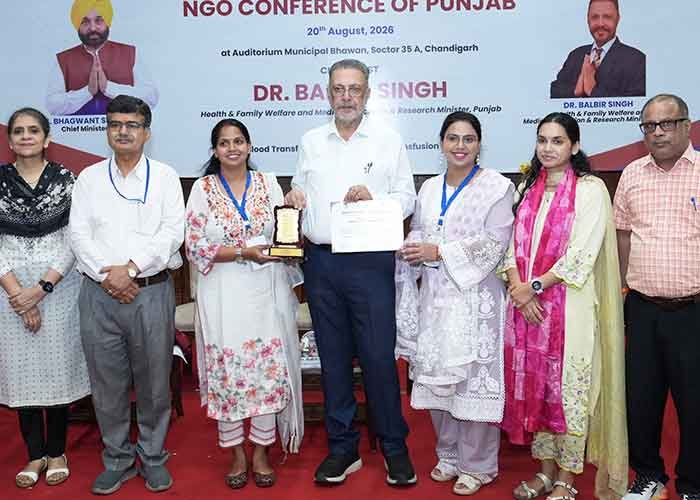
Addressing the State-Level NGO Conference organised by the Punjab State Blood Transfusion Council (PSBTC) at Municipal Bhawan in Chandigarh, the minister also announced that Punjab is strengthening its blood safety system through advanced testing technologies, including Nucleic Acid Testing (NAT) and Chemiluminescence Immunoassay (CLIA).
Dr Balbir Singh said NAT and CLIA can facilitate earlier detection of transfusion-transmitted infections such as HIV, Hepatitis B and Hepatitis C by reducing the diagnostic window period and thereby lowering the residual risk of transmission.
He said standardised protocols have also been issued for blood collection, testing, uniform blood-bag labelling and cross-matching to ensure consistency, traceability and safety across blood centres in the state.
The minister called for comprehensive, city-wise digital directories of voluntary blood donors to improve emergency response and prevent wastage. He said such directories would allow blood centres to identify and mobilise donors with specific blood groups through alerts when required, instead of repeatedly calling large numbers of donors to camps.
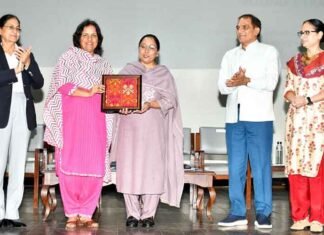
Dr Balbir Singh also felicitated 69 voluntary blood donation organisations that secured top positions across districts for their contribution to strengthening blood transfusion services.
Highlighting Punjab’s record in voluntary blood donation, the minister said the state has 201 licensed blood centres, including 51 government, seven military and 143 private or trust-run centres. During 2025-26, Punjab collected 5,44,167 units of blood. Between April and July 2026, another 1,84,194 units were collected through 2,065 voluntary blood donation camps, with voluntary donations accounting for 96.04 per cent of the total.
Apheresis facilities are currently operational at 17 blood centres across 13 districts, with plans to extend the service to the remaining districts.
On organ donation, Dr Balbir Singh said the recently established Punjab Institute of Liver and Biliary Sciences (PILBS) had conducted three liver transplants in the government sector within 15 days, at about one-third of the market cost. He said the institute was expected to begin kidney transplant services in the coming months.
Appealing to citizens and families to pledge their organs, he said kidneys, liver and corneas could help critically ill patients in cases of brain death.
The minister also expressed concern over anaemia among young women and urged youth and prospective couples to adopt healthier diets and active lifestyles, including daily exercise and greater consumption of natural foods. He said the Health Department, in collaboration with Punjab Agricultural University and the Food and Drugs Administration, had issued specialised dietary advisories for women and sportspersons.
Earlier, Dr RR Sharma, Professor and Head of the Department of Transfusion Medicine at PGIMER, said Punjab ranks third nationally in voluntary blood donation but first in repeat voluntary donations. Nearly 80 per cent of donors in the state are repeat donors, he said.
Dr Suchet Sachdev, Dr Paramjit Kaur, Dr Sangeeta Kumari and Dr Aikaj Jindal also shared their views on blood safety and donor mobilisation.
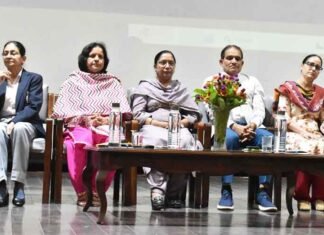
Special Secretary Health-cum-Project Director PSACS Sakshi Sawhney, Principal GMCH-32 Dr Ravneet Kaur, Additional Project Director PSACS Dr Vishal Garg and Joint Director Blood Transfusion Services Dr Sunita Devi were among the senior officials present.
 FOLLOW NOW