Jammu, August 20, 2026 (Yes Punjab News)
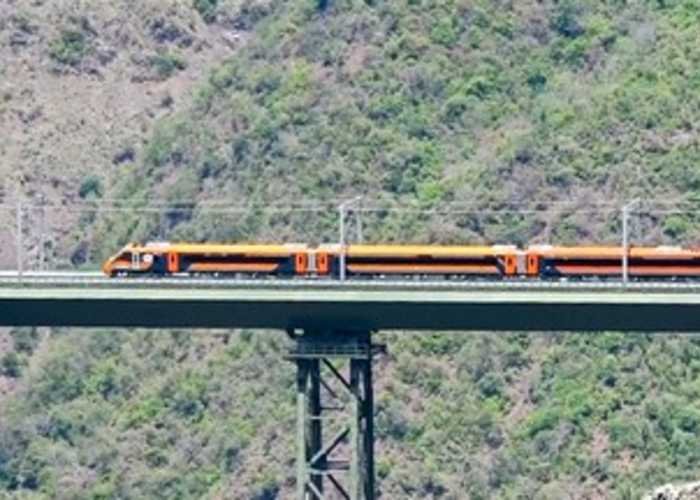
The Vande Bharat train has, for the first time, operated at a speed of nearly 100 kmph on the world’s highest railway bridge over the Chenab River, marking a significant boost to rail connectivity between Jammu and Kashmir.
Senior Divisional Commercial Manager, Jammu, Uchit Singhal, said on Thursday that the increased speed would help reduce travel time while providing passengers with faster, safer and more comfortable journeys.
“The move would provide passengers with faster, safer and more comfortable travel while also boosting tourism, trade and economic activities in the region,” Singhal said.
The Railway Ministry has approved an increase in the maximum permissible speed on the 111-km new broad-gauge rail section between Shri Mata Vaishno Devi Katra and Banihal under the Jammu Division of Northern Railway.
The revised approval allows trains to operate at speeds of up to 100 kmph on the entire section. Earlier, the permissible speed was 85 kmph between Katra and Sangaldan and 75 kmph between Sangaldan and Banihal.
Northern Railway said the speed enhancement was approved after ensuring compliance with all prescribed safety requirements.
The revised speed limit is expected to further reduce travel time between Shri Mata Vaishno Devi Katra and Banihal and strengthen rail connectivity to the Kashmir Valley.
The Chenab Rail Bridge, located in Jammu and Kashmir, is the world’s highest railway bridge and a major engineering landmark. It stands 359 metres (1,178 feet) above the Chenab River bed, making it around 35 metres taller than the Eiffel Tower. The bridge is 1,315 metres long and features a steel-and-concrete deck arch designed to withstand strong winds and earthquakes.
The development is part of the Udhampur-Srinagar-Baramulla Rail Link (USBRL), which has significantly improved rail connectivity between Jammu and the Kashmir Valley. The newly constructed track portion of the project spans 272 km, while the overall continuous rail connectivity between Jammu and Baramulla varies depending on the junctions used.
 FOLLOW NOW