
Bhopal, September 14, 2026 (Yes Punjab News)
A fresh debate over the proposed Uniform Civil Code (UCC) has emerged in Madhya Pradesh, with Muslim leaders opposing the legislation and appealing to Muslims and secular citizens to participate in a September 17 protest at Jantar Mantar in New Delhi.
The Madhya Pradesh Assembly passed the UCC Bill on July 21, but the legislation has not yet come into force as it awaits the President’s assent.
Members of the All India Muslim Personal Law Board (AIMPLB) discussed the issue at a meeting at its Khanugaon campus in Bhopal on Monday. Following the meeting, Bhopal City Qazi Mushtaq Ali Nadvi and Congress leader Arif Masood, an executive committee member of the AIMPLB, addressed a press conference and reiterated their opposition to the proposed law.
Nadvi said the Muslim community did not accept the UCC and questioned its necessity in view of constitutional guarantees relating to religious freedom and minority rights.
“The Constitution guarantees religious freedom and the rights of minorities, so the necessity and impact of the UCC need to be seriously considered,” he said.
He maintained that matters concerning Muslim personal law should be discussed by members of the community and people with knowledge of Islamic jurisprudence. Rejecting criticism of Muslim personal law on women’s rights, Nadvi said Islam provides women rights as mothers, daughters and wives, including property rights.
He also referred to a 1972 speech by former RSS chief M.S. Golwalkar while arguing that a common civil code was not essential for national unity.
Nadvi urged Muslims and secular citizens to participate in the September 17 programme at Jantar Mantar and said the community would follow further directions issued by the AIMPLB.
Masood said the Board had taken its position after consultations with individuals and organisations across the country. He said five members associated with the Board in Madhya Pradesh had deliberated on the issue and, with the Board’s approval, appealed to people in the state to join the Delhi protest.
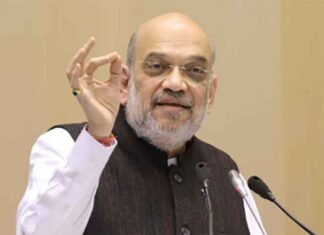
The issue has gained added political significance after Union Home Minister Amit Shah said on Sunday that the UCC would be introduced in all 21 states and Union Territories governed by the BJP-led NDA before the 2029 Lok Sabha elections.
UCC legislation has been passed in Uttarakhand, Gujarat, Assam and Madhya Pradesh. Uttarakhand is currently the only state among them where the law is in force, while Gujarat, Assam and Madhya Pradesh are awaiting presidential assent and subsequent notification.
Madhya Pradesh Congress president Jitu Patwari criticised the BJP over the issue, alleging that the UCC was being used to divert public attention from economic and social concerns. “UCC is a tool in the hands of the BJP to mislead the country and spread hatred,” he said.
 FOLLOW NOW