

Kathmandu, September 8, 2026 (Yes Punjab News)
A year after the Gen-Z movement triggered a dramatic political upheaval in Nepal, the Himalayan nation has witnessed a major transformation in its political landscape, while economic recovery has remained slow and uneven.
The protests on September 8 and 9 last year left 77 people dead and caused more than Rs 84 billion in damage to public and private property. The unrest brought down the government led by then-Prime Minister K.P. Sharma Oli and paved the way for an interim administration headed by former Chief Justice Sushila Karki.
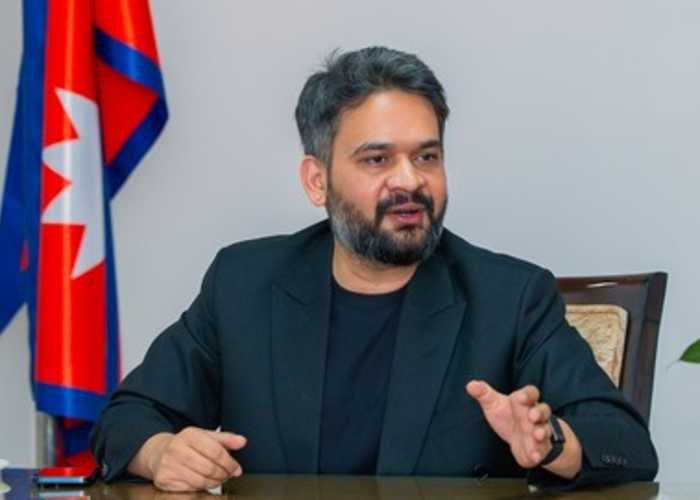
The March 5 election this year marked another turning point, with the Rastriya Swatantra Party (RSP), founded only in 2022, emerging as the dominant political force with a near two-thirds majority. Its leader, Balendra Shah, the former Mayor of Kathmandu Metropolitan City, became Prime Minister amid widespread expectations for a break from traditional politics.
The established parties, meanwhile, have struggled to regain public confidence. The Nepali Congress is facing an internal leadership contest between President Gagan Thapa and former Prime Minister Sher Bahadur Deuba. In the CPN-UML, Oli continues to retain control despite declining popularity, while the Nepali Communist Party led by former Maoist chief Pushpa Kamal Dahal ‘Prachanda’ has seen its political influence diminish sharply.
Political economy analyst Hari Roka described the RSP as a liberal-conservative alternative to the Nepali Congress and said communist forces had suffered significant erosion in their support base.
“Given the internal infighting the Nepali Congress is going through, the RSP is likely to remain a democratic alternative to the Nepali Congress in the short and medium term,” Roka told IANS.
However, the political transformation has not been matched by economic momentum. Former National Planning Commission Vice-Chairman Prakash Kumar Shrestha said weak private-sector investment and subdued credit demand had left banks with excess liquidity.
The World Bank has projected Nepal’s economic growth at just 2.3 per cent for fiscal 2025-26, below the government’s 3.85 per cent estimate. Although the government has set a 7 per cent growth target for 2026-27, the World Bank expects average growth of 4.4 per cent over the current and following fiscal years.
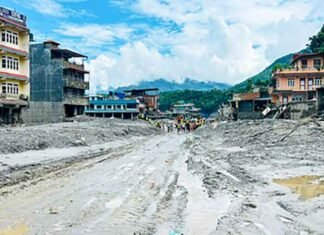
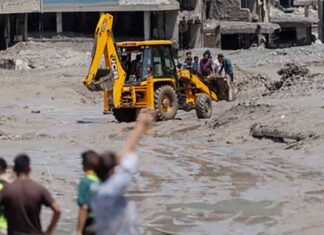
The economy has also faced multiple shocks. The Gen-Z protests damaged infrastructure and disrupted economic activity, while the US-Iran conflict contributed to shortages of fuel and construction materials. More recently, devastating floods and landslides caused further loss of life and infrastructure damage, with the government preliminarily estimating losses of more than Rs 200 billion.
Finance Minister Dr Swarnim Wagle has proposed a series of market-oriented reforms, including measures to facilitate overseas investment by Nepalis, allow non-resident Nepalis to participate in the secondary securities market, promote information technology and artificial intelligence, attract international private investment and raise the tax-exempt income threshold.
Yet analysts say implementation remains slow. Political economy analyst Arun Subedi said environmental, forest and land clearances continue to delay infrastructure projects, while promised reforms allowing private-sector participation in electricity trading have yet to be introduced.
The government is also considering a “sunset law” that would temporarily suspend selected legal provisions to accelerate major infrastructure projects.
At the same time, questions remain over the government’s economic direction, with Shah advocating greater state involvement in some enterprises while Wagle pursues market-oriented reforms.
Nepal’s authorities are also seeking to address one of the central grievances behind the Gen-Z movement: corruption. A commission has been established to examine property details of senior public officials who have held office since the early 1990s. Anti-money laundering investigations have also been initiated against former prime ministers and senior leaders, including Deuba, Prachanda and Oli, who have called the investigations politically motivated.
Governance reforms have included greater digitisation of government offices and online systems for administrative approvals. Subedi said there appeared to be some improvement in reducing small-scale bribery, but stressed that better governance alone would not be enough without tangible improvements in people’s lives.
Former interim Prime Minister Sushila Karki, marking the movement’s first anniversary, said political stability depended not merely on parliamentary numbers but on the character and functioning of those in power.
She urged the government to ensure good governance, control corruption, uphold the rule of law and respect citizens’ dignity.
With reconstruction needs mounting after successive crises, Nepal is also considering an international donors’ conference. Foreign Minister Shishir Khanal said the government would first complete a post-disaster needs assessment before deciding on the conference.
Analyst Subedi said the reconstruction drive could, despite the enormous losses, provide an opportunity to generate economic activity and give the country’s struggling economy fresh momentum.
 FOLLOW NOW