

Bengaluru, August 25, 2026 (Yes Punjab News)
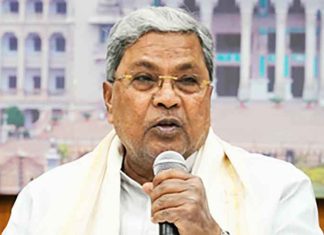
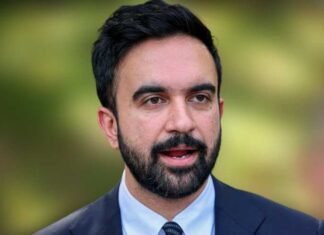
Karnataka Home Minister Priyank Kharge on Tuesday questioned the Centre’s ethanol policy over the sale of Food Corporation of India (FCI) rice to ethanol producers at prices significantly below its average acquisition cost.
Kharge said the economics of India’s ethanol programme “simply does not add up”, questioning the rationale behind using grain procured with public money for ethanol production and the benefits accruing to ordinary consumers.
His remarks came after data provided by the Centre in Parliament showed that FCI supplied 6.35 million tonnes of rice to ethanol plants between June 2025 and June 2026. The rice was sold at Rs 2,250 per quintal between June and October 2025 and Rs 2,320 per quintal from November 2025, while FCI’s average acquisition cost was Rs 3,719.72 per quintal in 2024-25 and Rs 3,889.46 per quintal in 2025-26.
Kharge questioned the economic rationale of the government bearing procurement, storage and transportation costs before selling the grain at a substantially lower price.
“What kind of economic policy is this?” he asked, questioning who ultimately benefits from the arrangement.
He also questioned whether large quantities of foodgrains were being diverted to provide raw material for rapidly expanded ethanol production capacity, and whether the government’s purchase of ethanol at remunerative prices, after supplying producers with lower-priced rice, delivers any meaningful benefit to consumers.
Kharge further sought clarity on whether ethanol blending has lowered petrol prices and whether its impact on vehicle mileage and maintenance costs has been adequately assessed.
The Centre, however, has maintained that no subsidy is specifically extended to ethanol producers for FCI rice, saying the grain is sold at fixed prices under the Open Market Sale Scheme (Domestic). The government has also said surplus FCI stocks are made available only after food-security requirements are met.
Kharge demanded that the Centre provide a transparent account of the economic, social and public-interest implications of diverting foodgrains towards ethanol production.
“Who is subsidising whom? Who are the real beneficiaries of this system?” he asked, reiterating that the apparent contradictions in the country’s ethanol policy should be placed before the public.
 FOLLOW NOW