
New Delhi, September 5, 2026 (Yes Punjab News)
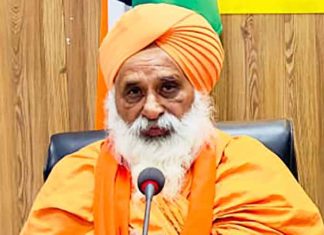
Jamiat Ulama-i-Hind president Maulana Syed Arshad Madani on Saturday criticised the demolition of a mosque inside the Collectorate complex in Uttar Pradesh’s Saharanpur, alleging that the use of bulldozers against illegal structures was increasingly becoming an instrument of “revenge, prejudice, and hatred”.
The remarks came after the administration demolished the mosque following rejection of an appeal by the Muslim side in the matter. Describing the action as “extremely regrettable”, Madani questioned what he termed a double standard in the enforcement of laws that are constitutionally applicable to all citizens.
“Today, bulldozers are increasingly becoming less a symbol of justice and more an instrument of the politics of revenge, prejudice, and hatred,” Madani said in a post on X.
He said the issue went beyond the mosque and raised questions about constitutional supremacy, the rule of law, religious freedom, equality before law and the impartiality of the state.
Referring to the Places of Worship Act, 1991, Madani also pointed to a provision concerning “Waqf by User” in the new Waqf law. He said the mosque was registered with the Waqf Board under Registration No. 451 and that old land records contained the names of Yaqub Khan and Wahid Khan.
According to Madani, the mosque committee had submitted documents dating to 1911, along with municipal records and old revenue entries, arguing before the court that the mosque existed before the present Collectorate building. He questioned the decision to proceed with demolition despite what he described as historical and legal evidence.
Madani said that if illegal occupation or encroachment was the basis for administrative action, the same criteria should be applied uniformly to religious structures belonging to all communities.
He questioned whether other religious structures that have stood for decades on government land, roads and public spaces elsewhere in the country face action with “the same haste, severity, and standard”.
“If not, then the extraordinary harshness shown against one particular religious site appears contrary to the principle of equal justice,” he asserted.
Madani maintained that the Constitution does not create first- and second-class citizens. “We are not seeking any special concession; we are only asking for equal justice,” he said, arguing that the same legal standards should apply to mosques and other religious places.
He added that if constitutional protections and laws are intended for everyone, their enforcement and protection must also be equal.
 FOLLOW NOW