

New Delhi, September 5, 2026 (Yes Punjab News)
AIMIM president Asaduddin Owaisi on Saturday questioned whether the constitutional guarantee of religious freedom still applies to Muslims following the demolition of a mosque at the Saharanpur Collectorate complex in Uttar Pradesh.
Reacting on X, Owaisi alleged that the mosque had existed for more than a century and said the mosque committee had produced records dating back to 1911 to establish its existence. He also invoked the legal concept of Waqf by User, arguing that continuous public prayers and possession supported the mosque’s status.
“Does the constitutional guarantee of freedom of religion no longer apply to Muslims?” Owaisi said, questioning what he described as the repeated demolition of Muslim places of worship on “flimsy grounds”.
He further argued that the government could not claim possession over immovable property without addressing the historical records and long-standing use of the site. Owaisi alleged that the mosque predated the Collectorate and said religious freedom could not depend on the “mercy” of others.
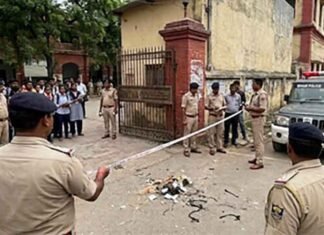
The mosque was demolished by the Saharanpur administration early Saturday after an appeal against the demolition was rejected by the court. Authorities have maintained that the structure was an illegal construction on government land within the Collectorate complex.
The development has triggered a political controversy in western Uttar Pradesh. Samajwadi Party MP Iqra Hasan was scheduled to travel to Saharanpur but was placed under house arrest before leaving, with police deployed outside her residence.
Congress MP Imran Masood also criticised the demolition, disputing the administration’s claim over the land. Speaking to IANS, he said Khasra records allegedly continued to show the names of Waheed Khan and Yakub Khan, whose zamindari, he claimed, covered the area where the mosque was constructed.
Masood also said the mosque was registered with the Waqf Board and alleged that the board had not been made a party to the proceedings. He cited continuous prayers and other records in support of the mosque’s claim.
He further alleged that the mosque had existed for 70–80 years and that the Muslim side had not been given sufficient time to approach a higher court after the lower court proceedings.
The administration’s action and the competing claims over the land and the mosque’s legal status are expected to remain a subject of political and legal debate.
 FOLLOW NOW