
New Delhi, August 24, 2026 (Yes Punjab News)
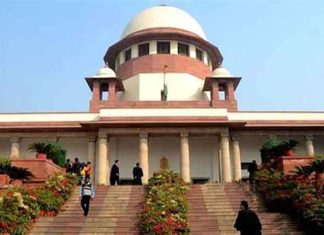
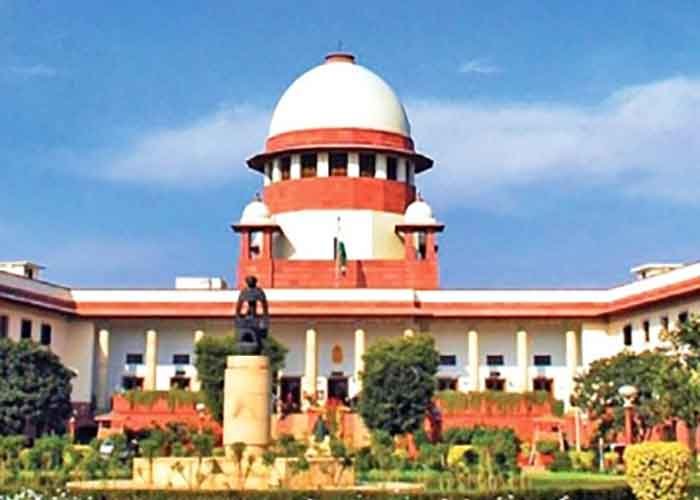
The Supreme Court on Monday stayed the operation of an Allahabad High Court order directing criminal and disciplinary proceedings against two advocates over allegations that a fabricated copy of a land acquisition award was used to secure monetary relief for their clients.
A Bench of Justices P.K. Mishra and Shree Chandrashekhar passed the interim order while hearing a special leave petition filed by advocate Shiv Kant Mishra against the Allahabad High Court’s July 30 order. The Supreme Court issued notice on the petition and directed that the matter be listed on October 12.
The High Court had directed its Registrar General to initiate proceedings under Section 340 of the Code of Criminal Procedure (CrPC) against Shiv Kant Mishra and Krishna Kant Mishra. It had observed that their alleged conduct prima facie attracted Section 199 of the Indian Penal Code, punishable under Section 193 for giving false evidence.
The High Court had also directed the Registrar General to lodge complaints before the Bar Council of India and the state Bar Council seeking cancellation of the advocates’ licences.
The dispute arose from a claim for interest on compensation relating to land acquired by the Bareilly Development Authority. The Allahabad High Court, while allowing a review petition filed by the authority, found a discrepancy between the original award dated April 26, 2016 and a typed copy produced before the court.
According to the High Court, the typed copy contained an additional provision for interest at 9 per cent per annum for the first year and 15 per cent thereafter, which was allegedly absent from the original award.
A coordinate bench had relied on the typed copy while passing an order on May 24, 2024, directing the authority to pay interest to landowners from the date of dispossession until the award was declared.
The authority later challenged the order after discovering the alleged discrepancy and produced the original award during review proceedings. The High Court rejected the argument that the difference was merely a typographical error, observing that “a typographical error stands out from an act of deception.”
The court had concluded that the alleged alteration went beyond an inadvertent mistake and termed the conduct “misfeasance by the counsels”. It also rejected their plea for forgiveness, holding that the apologies offered after the discrepancy came to light could not be treated as genuine remorse.
The High Court had set aside its May 24, 2024 order on the ground that it had been obtained by “playing fraud on this Court” and directed the Bareilly Development Authority to recover amounts already paid to the beneficiaries.
The Supreme Court’s interim order has now stayed the operation of the challenged High Court order, including the directions arising from its findings against the two advocates, pending further consideration of the case.
 FOLLOW NOW