New Delhi, September 28, 2026 (Yes Punjab News)
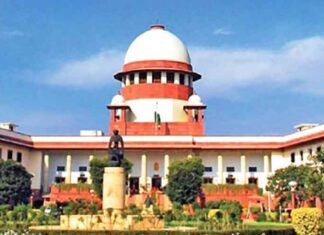
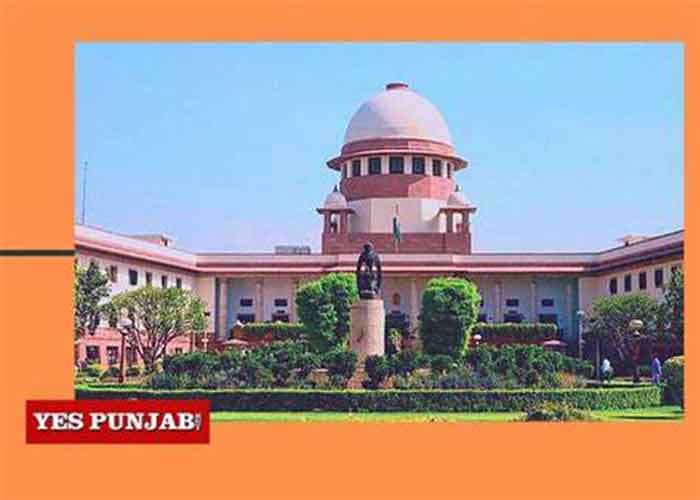
The Supreme Court on Monday directed the Central Board of Secondary Education (CBSE) to extend to Class 6 students the same exemption from the mandatory third-language Board examination that has already been granted to students of Classes 7, 8 and 9 under the revised three-language formula, despite opposition from the Centre.
A Bench headed by Chief Justice of India (CJI) Surya Kant and comprising Justices Joymalya Bagchi and V. Mohana ruled that students currently studying in Class 6 would not be required to appear for a mandatory CBSE Board examination in the third language when they reach Class 10.
The direction came after the Bench considered the transitional arrangement presented by Additional Solicitor General Aishwarya Bhati, under which students of Classes 7, 8 and 9 would continue studying the third language but would not be required to take a CBSE Board examination in the subject.
“There will be no pass/failure. There will only be an appearance certificate,” the Supreme Court observed, clarifying the nature of the assessment under the transitional arrangement.
Solicitor General Tushar Mehta informed the Bench that the Centre was not in favour of extending the exemption to Class 6 students and sought permission to implement the revised policy during the current academic year. He submitted that discussions had taken place on the court’s earlier suggestion to exempt the current Class 6 batch.
Mehta also told the court that around 1.2 per cent of the 28,819 CBSE-affiliated schools were yet to put the necessary infrastructure in place, while the remaining schools were compliant and textbooks and other learning materials were available.
Taking note of the logistical challenges, the Bench indicated that a “soft launch” of the revised framework could be adopted for Class 6 students. In its order, the Supreme Court directed that students of Class 6 be granted the same exemption as those of Class 7.
The relaxation will allow Class 6 students to continue studying the third language as part of their curriculum without facing a mandatory Board examination in the subject in Class 10. Their promotion or certification will also not be withheld on this account.
The Bench further cautioned that it would intervene if any school withheld a student’s promotion on the basis of internal assessment in the third language. It also directed the CBSE to appoint an officer to contact schools that were yet to establish the required infrastructure and assess the difficulties they were facing.
The Supreme Court is examining a batch of petitions challenging the CBSE’s revised three-language formula, which requires students to study three languages, including at least two Indian languages.
The petitions challenge the CBSE Secondary School Curriculum for Classes IX and X for 2026-27, along with circulars issued on April 9 and May 4. The petitioners have contended that the revised framework restricts students’ academic choices by making two Indian languages compulsory from Class 6 onwards.
Represented by senior advocate Anand Grover, along with advocates Tripti Tandon and Rohit Kumar, the petitioners have also raised concerns about the availability of qualified teachers, textbooks and other teaching materials. They have argued that the revised curriculum was introduced after the academic session had already commenced.
The Supreme Court had earlier declined to stay the implementation of the revised policy while agreeing to examine concerns relating to its rollout, including the availability of teachers and study materials. It had also sought responses from the Centre, CBSE and the National Council of Educational Research and Training (NCERT).
Under the transitional guidelines subsequently issued by CBSE, students of Classes 7, 8 and 9 are exempt from a third-language Board examination in Class 10, with assessment to be conducted internally at the school level. The latest direction extends this exemption to the current batch of Class 6 students.
 FOLLOW NOW