
New Delhi, October 26, 2026 (Yes Punjab News)
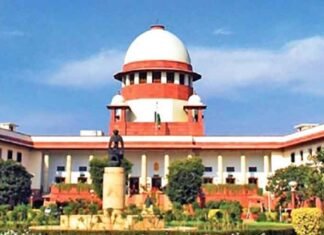
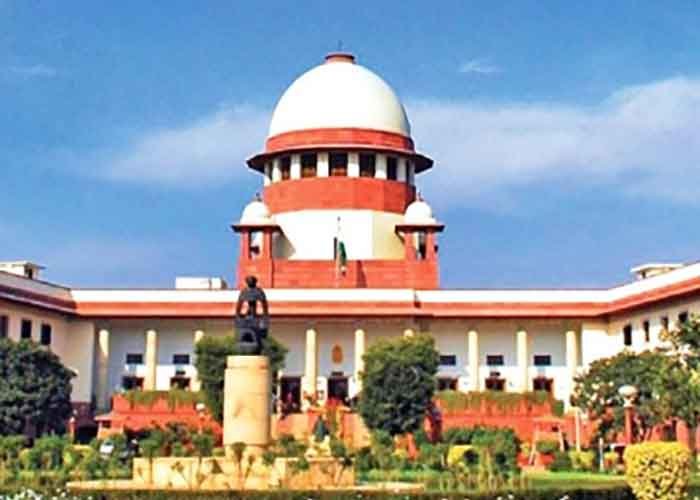
The Supreme Court on Monday directed the Uttar Pradesh government to pay ₹6 lakh in compensation to a man who spent six years in custody as an undertrial in a murder and kidnapping case before being acquitted, strongly criticising what it described as a “slipshod investigation” and “haphazard prosecution.”
A Bench of Justices J.B. Pardiwala and K. Vinod Chandran, while disposing of a special leave petition filed by Arun alias Deepak, said the case illustrated how a deficient investigation could jeopardise an individual’s life and liberty. The court directed the state government to pay the compensation within one month, warning that any delay would attract interest at 18 per cent per annum.
“Six years have been erased from the life of a man on the strength of a concocted story built on mere surmises and conjectures. Not even a rudimentary investigation was carried out,” the Supreme Court observed.
In its judgment, authored by Justice K. Vinod Chandran, the Bench said the compensation amount was modest compared with the years the petitioner had spent in custody. It directed that a copy of the judgment be sent to the Uttar Pradesh Director General of Police and the state’s Home Secretary.
The case came before the apex court during proceedings on the petitioner’s bail plea. On March 23, the court had directed the trial court to conclude the proceedings within three months. The petitioner had been in custody since November 14, 2019, in a case based entirely on circumstantial evidence.
After being informed that the trial had concluded with the petitioner’s acquittal, the Supreme Court called for the trial court’s judgment to examine the circumstances surrounding the prosecution. It said the records revealed serious shortcomings in the investigation and the evidence presented at trial.
The case originated from an FIR registered in 2019 at Achhnera police station in Agra district under Sections 364, 302 and 201 of the Indian Penal Code, relating to kidnapping or abduction for murder, murder and causing the disappearance of evidence.
According to the prosecution’s case, the deceased had gone missing after leaving his workplace at Kiraoli Tehsil on October 18, 2019. His father initially lodged a missing-person report and later informed the police about information suggesting that his son had allegedly been abducted by unknown persons.
Arun alias Deepak and another man, Lalit Kishore, were subsequently named as accused. The prosecution relied on CCTV footage, an alleged confession and recoveries said to have been made during the investigation.
However, the Supreme Court noted that the petitioner had not been named in the FIR or in statements recorded under Section 161 of the Code of Criminal Procedure. It also found that the bones recovered during the investigation had not been conclusively identified as belonging to the missing person, while the postmortem examination had not established the cause of death.
The Bench highlighted that no DNA comparison had been conducted to determine whether the recovered bones belonged to the deceased, despite the doctor stating that such an examination was necessary. The results of the forensic examination were also not disclosed during the trial.
The court further observed that the prosecution had failed to establish that the accused had led police to the locations from which various articles were recovered or that the recoveries had been made pursuant to disclosure statements recorded in accordance with the law.
Only six witnesses were examined by the prosecution, including the informant, a doctor, police personnel and an independent witness. The trial court ultimately acquitted the petitioner after finding that none of the circumstances relied upon by the prosecution had been proved.
“We cannot but deprecate the manner in which the investigation was carried out and the prosecution conducted,” the Supreme Court said, adding that the Uttar Pradesh Police would do well to educate its officers on proper investigative procedures.
The Bench emphasised that investigating and prosecuting agencies are essential stakeholders in the justice delivery system and should not focus solely on securing convictions.
“The State cannot shirk from its responsibility to protect its citizens, especially when a person arraigned in a criminal case is presumed innocent until proven guilty,” the court observed.
It added that the responsibility of these agencies extends beyond victims, complainants and injured persons to include the accused, whose rights must also be protected.
“The investigation and prosecuting agencies exist not merely to, and by whatever means, bring in a conviction. They should recognise themselves to be essential stakeholders in the justice delivery system, ensuring justice, not only to the victim, the de facto complainant and the injured but also to the accused,” the judgment stated.
Observing that it encounters instances of injustice in numerous cases, the Supreme Court said the deficiencies in the present matter were particularly serious and warranted reparation for the petitioner, who had himself become a victim of the system.
The court accordingly directed the Uttar Pradesh government to pay ₹6 lakh within one month, with interest at 18 per cent per annum if the payment is delayed beyond the stipulated period.
 FOLLOW NOW