
New Delhi, October 26, 2026 (Yes Punjab News)
Posters declaring “200 seat haq hai hamara, UP ko hai Rahul Gandhi par bharosa” (200 seats are our right, Uttar Pradesh trusts Rahul Gandhi) have triggered a fresh political controversy in Uttar Pradesh, highlighting the challenges facing the Congress-Samajwadi Party (SP) alliance as negotiations over seat-sharing for the 2027 Assembly elections remain unresolved.
Samajwadi Party chief Akhilesh Yadav swiftly dismissed the posters as “fake” and accused the ruling Bharatiya Janata Party (BJP) of attempting to create divisions within the INDIA Bloc. He reportedly alleged that the BJP was uncomfortable with Opposition unity and was using unauthorised displays to create mistrust between alliance partners.
Yadav is also reported to have demanded action against municipal officials for allegedly allowing the posters to be displayed without proper authorisation.
While the authenticity and motive behind the posters remain disputed, their appearance has brought renewed attention to the complicated seat-sharing negotiations between the Congress and the SP in India’s most politically significant state.
The two parties secured a strong result in Uttar Pradesh during the 2024 Lok Sabha elections, giving the INDIA Bloc a major boost and challenging the BJP’s dominance in the state. That performance has strengthened the Congress’s argument for a larger role in the alliance ahead of the next Assembly elections.
Reports suggest that the Congress is seeking a substantial number of seats, while sections within the SP remain unconvinced that its ally has sufficient organisational strength and grassroots support to justify a large allocation.
The Congress is reportedly pushing for an early agreement and has been seeking what it considers a “respectable” share of the 403 Assembly seats. Various reports have suggested that the party could seek more than 150 seats, while recent accounts have indicated that an initial list of between 175 and 200 constituencies may have been submitted by the Congress leadership. These figures have not been established as part of a final agreement.
The disagreement has reportedly spilled into public exchanges between leaders of the two parties, with both sides debating their respective electoral contributions, organisational reach and political standing.
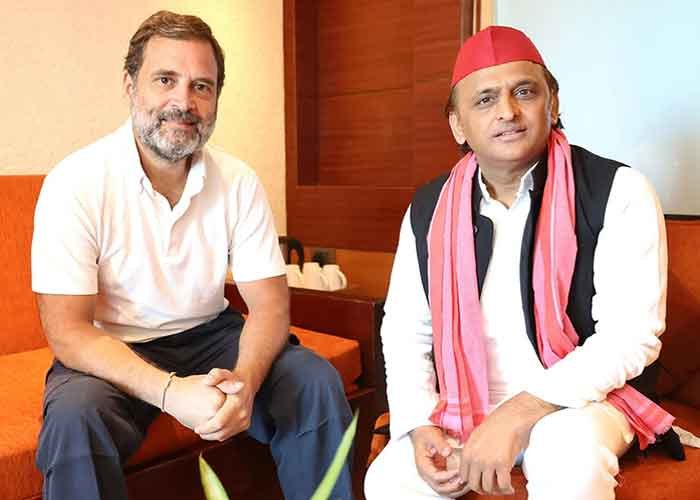
A final decision on seat-sharing is expected to depend on further discussions between Congress leader Rahul Gandhi and SP chief Akhilesh Yadav, as the alliance attempts to balance electoral ambitions with the need to maintain Opposition unity.
The posters, which appeared in Lucknow and other districts, projected an ambitious claim for a near-equal partnership in an alliance in which the SP remains the stronger regional force in terms of electoral presence and organisational reach.
The Congress, however, appears encouraged by Rahul Gandhi’s national profile and the INDIA Bloc’s campaign on broader political issues, including the Election Commission’s Special Intensive Revision (SIR) of electoral rolls. The party may also view a larger seat allocation as an opportunity to rebuild its organisational presence across Uttar Pradesh.
The SP, meanwhile, is expected to prioritise the winnability of candidates, existing grassroots networks and constituency-level electoral calculations when deciding how many seats to allocate to its ally.
The negotiations therefore involve more than simply dividing constituencies. Both parties must assess electoral arithmetic while preserving mutual trust, political respect and the willingness to compromise.
In this context, the disputed posters have highlighted a central challenge for the alliance: balancing competing claims and ambitions without allowing seat-sharing differences to undermine the broader Opposition partnership ahead of the 2027 Uttar Pradesh Assembly elections.
 FOLLOW NOW