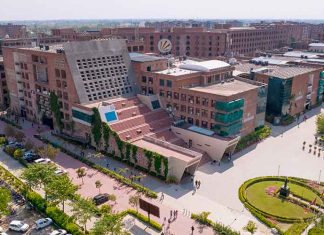
The management comes from a business family.
From a sweet shop, to an auto dealership, to an educational institute and then to a university.
The meteoric rise was not only impressive but inspiring too. Anybody can dream big, and the family showed that there was nothing wrong in dreaming big — that the sky is the limit.
The family is cultured, social and soft-spoken. They have worked hard over decades to build an institution of which they are understandably proud.
But whenever something serious happens on the university campus, they turn so panicky that they appear ready to put all their might, resources and relationships into controlling the information that comes out.
And that is where they do what they should not. They perhaps don’t realise that their approach can become counterproductive.
Their desire to protect LPU’s image is understandable. Their method of protecting it is what this column questions.
There have been several student suicides, controversies and now an alleged rape allegedly linked to a suicide. Whenever something serious happens, the management, instead of focusing on probing it, resolving it and preparing to prevent its recurrence, appears to slip into a ‘Special Mode’ — an Image Protecting Exercise.
Over the years, students and others have repeatedly alleged that information surrounding such incidents is suppressed or tightly controlled. The management, of course, may have its own explanation for how individual cases were handled. But somewhere along the way, ‘denial mode’ seems to have become the standard operating procedure.
This time, however, things have gone out of their hands.
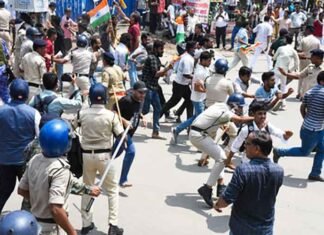
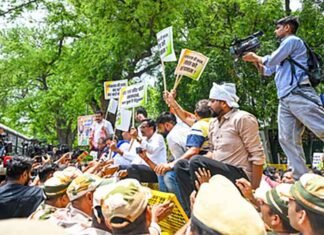
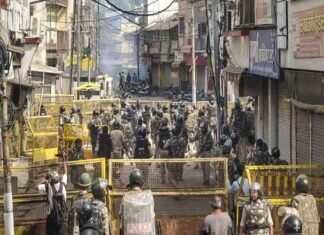
Students protesting over allegations of a sexual assault on the campus blocked the national highway outside the university for hours. There was vandalism and arson. Police had to intervene. An FIR has been registered against an unidentified person and an SIT constituted. LPU suspended regular classes for 10 days and postponed its mid-term examinations. Punjab Chief Minister Bhagwant Mann directed DGP Gaurav Yadav to visit the university and review the situation.
All this over an incident which LPU says did not happen.
And that brings us to an issue much bigger than the allegation itself — trust.
The alleged rape has not been established. The identity of the alleged victim has not been established publicly. LPU has categorically denied the allegation, describing reports of the incident as false, baseless and fabricated. The police investigation must establish the truth, and until it does, nobody should pronounce either the allegation or the denial as the final word.
But suppose LPU is right.
Suppose the investigation ultimately establishes that no rape took place.
A question would still remain: Why did such a large number of LPU’s own students refuse to take the university’s denial at face value?
That is the trust deficit LPU needs to worry about.
At the moment, I have no confirmation of what actually happened at the university and hence I am neither supporting nor endorsing the allegation. I have taken up the issue because, whether the alleged incident happened or not, it ultimately boiled over into a major unsavoury situation. The students protested because they believed that something serious had happened and that information was being suppressed.
I have no intention of undermining the wisdom of the youth or simply dismissing their apprehensions.
Their apprehensions may ultimately prove right or wrong, but the fact that they did not trust the official version brings us back to the larger question — why this trust deficit?
The rise of LPU as a private university has actually added to Punjab’s education system, and a huge number of students from across India, besides students from foreign countries, come here to pursue their studies. I don’t see anyone having any objection to a family aspiring that LPU should always be portrayed in a positive light.
But whenever something as serious as a student jumping from a high-rise hostel happens, the casualty is not only the unfortunate victim. At LPU, transparency too seems to get killed almost as quickly as the tragedy unfolds.
Insiders and students have, over the years, alleged that whenever such an incident takes place, officials rush into action, the area is cleared quickly and the emphasis shifts towards preventing the incident from damaging the image of the university. There have also been allegations that people who matter in the administration and elsewhere are approached when a crisis erupts.
These allegations may have explanations. The university may dispute them.
But perceptions don’t develop in a day.
The management of the university has built formidable relationships over the years with politicians, bureaucracy and almost everybody who matters. There is nothing inherently wrong with that. Any institution of LPU’s size will interact extensively with governments, officials and political leadership.
The problem arises when students begin believing that these relationships are being used to manage an incident, hush it up or brush it under the carpet, rather than allowing complete transparency about it.
The staff is programmed into this.
They have their own limitations. They know the system, they know what is expected of them when a crisis erupts, and they have jobs to protect.
But students don’t have any such limitations.
And then there is Gen Z.
This is a generation with a mobile phone in its hand, a camera running, social media at its fingertips and very little patience for the old style of information management. The recent Gen Z phenomenon witnessed at Jantar Mantar and elsewhere has brought a different kind of awakening among youngsters. They question, record, circulate, mobilise and challenge.
An institution cannot deal with this generation with yesterday’s crisis-management manual.
And now a question that has been haunting me for quite some time.
I would kneel before anyone who can come out with an authentic figure as to how many students have died by suicide on the LPU campus since the institution came into being.
Why should somebody else provide that number?
The management itself should come out with it.
Tell us how many such deaths took place. Tell us which cases were registered. Tell us, subject of course to legitimate privacy considerations, what investigations followed. Tell us what those investigations found. Tell us whether the bereaved families raised questions. Tell us whether those questions were answered and whether the families were satisfied with the answers. Tell us what institutional lessons were learnt and what changes were made.
There have been unnumbered cases in the literal sense that no consolidated number is readily available to the public.
LPU can end that debate tomorrow.
Publish the numbers.
Transparency doesn’t mean accepting guilt.
Transparency means accepting scrutiny.
Did the university, after any of these suicides, think of organising motivational lectures or counselling sessions by subject experts who could guide students on how to face life’s challenges, find solutions to seemingly insurmountable problems and seek help rather than ending their lives?
After all, education is not all about increasing student numbers, collecting fees, teaching and handing over degrees. Educational institutions also have a responsibility to counsel and motivate students, help them come out of desperate situations and prevent them from moving towards an extreme step that not only ends a young life but leaves an everlasting scar on the minds of their loved ones.
No one, including me, can believe that the university must be at fault every time a student decides to take the extreme step.
There can be scores of reasons that drive somebody to a point where he or she decides to quit. Personal relationships, family problems, academic pressure, financial difficulties, mental distress and circumstances completely unrelated to the university may be involved.
A student jumping from a high-rise building does not automatically make the owner of that building responsible.
If somebody jumps from a hotel, does the hotel owner automatically become responsible? If somebody takes the extreme step in a government building, does the government automatically become responsible?
Obviously not.
Then why panic?
Let a fair inquiry happen. Let it be reported. Listen to the family. Listen to eyewitnesses. Listen to students. Listen to the staff and faculty. Let the police investigate. Put the university’s version before the public too.
But don’t let the information die with the student.
People — and more precisely, students and their parents — have a legitimate interest in knowing what happened to somebody who was a classmate, course mate or university mate of their child.
Why did he or she decide to end life?
Was anybody responsible?
Was nobody responsible?
Was it something entirely personal?
Let an investigation answer it.
But when a student dies by suicide, the perception among sections of the student community is that the whole machinery goes into ‘kill transparency and suppress information’ mode.
That perception itself should worry LPU.
Whenever such incidents happen elsewhere, parents, acquaintances and students often come forward seeking answers. At LPU this time, the situation became extraordinary: students took charge of the national highway, traffic remained disrupted for hours, university property was vandalised and parts of it were set on fire, and the police eventually used force while clearing protesters.
There are also allegations that outsiders entered the university complex and played a role in the violence and arson. That aspect too must be investigated thoroughly. Those responsible for violence cannot take shelter behind a legitimate demand for transparency.
A demand for answers does not give anybody the right to burn property, attack anyone or take the law into their own hands.
But neither should the violence be allowed to bury the question that preceded it.
How did the trust deficit become so huge?
Perhaps the management believes that suppressing negative information protects the LPU brand.
I think the opposite may now be happening.
Every attempt to control information feeds suspicion. Every hurried denial produces another question. Every unanswered question becomes another rumour. And every rumour finds hundreds of mobile phones ready to carry it across the campus within minutes.
This time the consequences spilled outside the university gates.
The ‘kill transparency’ approach did not merely disturb students, their families, staff and management. The unrest affected commuters on one of Punjab’s busiest highways and businesses and residents of nearby areas whose movement and normal life suffered.
The university which the family built with decades of hard work deserves to have its reputation protected.
But reputation cannot permanently be protected by suppressing bad news.
Sometimes the safest way of protecting an institution’s image is to tell people exactly what happened — even when what happened is unpleasant.
The old modus operandi cannot guarantee success every time.
This time, things came to a boil, and it cost dearly to everybody concerned — including the university itself.
The management needs to change its mindset.
This is an age where you cannot suppress information or kill transparency.
LPU needs to introspect.
HS Bawa – September 28, 2026
 FOLLOW NOW