

Jaipur, August 12, 2026 (Yes Punjab News)
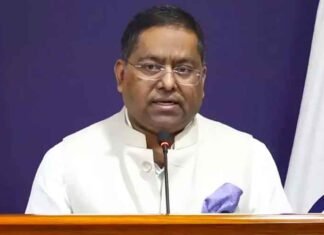
Finance Minister Nirmala Sitharaman on Wednesday said BRICS economies are among the major engines of global growth but face common structural challenges in mobilising private capital at scale.
Addressing a seminar on “The Role of the New Development Bank in Mobilising Private Capital in Member Countries” on the sidelines of the BRICS Finance Ministers’ and Central Bank Governors’ Meeting, Sitharaman said the challenge was not simply the availability of capital but creating the confidence, stability, predictability and credible long-term frameworks needed to sustain private investment.
The seminar was held in Jaipur under India’s BRICS chairship.
Sitharaman highlighted the role of multilateral development banks in de-risking investments, improving the bankability of projects and strengthening investor confidence to facilitate large-scale private capital mobilisation.
She said the future of development finance would depend on partnerships in which multilateral institutions, governments and the private sector bring their respective strengths to the table.
Citing India’s experience, the Finance Minister said sustained public capital expenditure and structural reforms had helped strengthen the country’s infrastructure ecosystem.
She noted that public investment had increased substantially over the past decade, supporting the creation of assets across highways, railways, ports, logistics, digital infrastructure and energy networks.
According to Sitharaman, public capital should serve as a catalyst for private investment rather than replace it. She cited measures such as viability gap funding (VGF), the hybrid annuity model (HAM) for road projects and credit enhancement mechanisms aimed at improving project bankability.
She also highlighted Infrastructure Investment Trusts (InvITs) as an instrument for recycling capital and attracting long-term institutional investors.
Referring to the Union Budget 2026-27, Sitharaman said several measures had been announced to facilitate private investment, including dedicated rail freight corridors, high-speed rail corridors, the operationalisation of new National Waterways and a coastal cargo promotion scheme.
Department of Economic Affairs Secretary Anuradha Thakur, in her welcome address, said capital mobilisation could not rely solely on favourable market conditions and needed durable institutional frameworks.
The seminar brought together senior policymakers, multilateral institutions and private-sector representatives. It was followed by a panel discussion involving representatives of BRICS countries, financial institutions, think tanks and academia.
 FOLLOW NOW