
New Delhi, August 12, 2026 (Yes Punjab News)
The Supreme Court on Wednesday ordered a Central Bureau of Investigation (CBI) probe into the custodial death of a 34-year-old man in Chhattisgarh and directed the state government to pay Rs 25 lakh as interim compensation to his widow and two minor daughters.
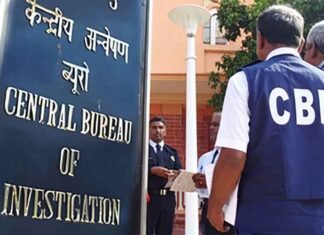
A Bench of Justices Vikram Nath and Sandeep Mehta directed the CBI to register a regular criminal case into the circumstances surrounding the death of Shravan Suryavanshi alias Sarvan Tamre and assign the investigation to a senior officer.
The court said all officials found responsible for custodial violence should be proceeded against and prosecuted in accordance with law after the investigation. It also directed the CBI to examine the conduct of Chhattisgarh government officials who allegedly failed to take appropriate action despite the findings of a judicial inquiry.
The investigation has been ordered to be completed expeditiously, with the CBI directed to submit its report on October 13, the next date of hearing.
The proceedings arose from a petition filed by Shravan’s widow, Lahra Bai Tamre, along with their daughters Sandhya and Sakshi, challenging an October 3, 2024 judgment of the Chhattisgarh High Court.
Shravan was arrested by Seepat police in Bilaspur district on January 18, 2024, in a case under Section 34(2) of the Chhattisgarh Excise Act concerning the alleged possession of six litres of raw mahua liquor. He was subsequently sent to Central Jail, Bilaspur.
On January 21, he was referred to CIMS Hospital, Bilaspur, where he died during treatment the following day.
The family alleged that Shravan had been brutally assaulted while in police or jail custody and that custodial violence caused his death. The state government, however, had told the High Court that a medical examination following his arrest had found no external injuries and that Shravan had a history of alcohol consumption and body swelling.
A judicial inquiry was subsequently conducted. In its July 22, 2024 report, the Judicial Magistrate First Class, Bilaspur, opined that the death appeared to have resulted from complications arising from a head injury.
Taking note of the inquiry report, the Chhattisgarh High Court had awarded Rs 1 lakh compensation to Shravan’s widow and daughters, observing that he had died an unnatural death and that his family had suffered the loss of his estate, love, affection and financial support.
The High Court had not, however, directed registration of an FIR or a probe into the circumstances of his death. It had ordered the state to pay the compensation within eight weeks, with 9 per cent annual interest applicable in case of default.
The family subsequently approached the Supreme Court. On July 28, the apex court noted that the state’s response did not disclose what steps had been taken towards registration of an FIR and investigation. It also found the Rs 1 lakh compensation awarded by the High Court prima facie inadequate considering the gravity of the loss.
The Supreme Court subsequently directed the Chhattisgarh Director General of Police and Principal Secretary (Home) to appear through video conferencing and sought instructions from the state government.
After hearing the parties on August 4, the court reserved its order.
While directing the payment of Rs 25 lakh as interim compensation, the Supreme Court clarified that the final amount would be determined while deciding the petition.
The court noted that the High Court’s findings that Shravan was the sole breadwinner of his family and died an unnatural death following violence during his custody had not been disputed by the state.
The case also raises the broader constitutional issue of state accountability for custodial deaths. The High Court had relied on the established principle that the government may be held liable to compensate the family when an unnatural custodial death violates the fundamental right to life guaranteed under Article 21 of the Constitution.
It had also referred to the Supreme Court’s landmark judgment in D.K. Basu vs State of West Bengal, which held that custodial violence and deaths in custody strike at the rule of law, particularly because such acts are committed by those entrusted with protecting citizens.
 FOLLOW NOW