
Washington, October 24, 2026 (Yes Punjab News)
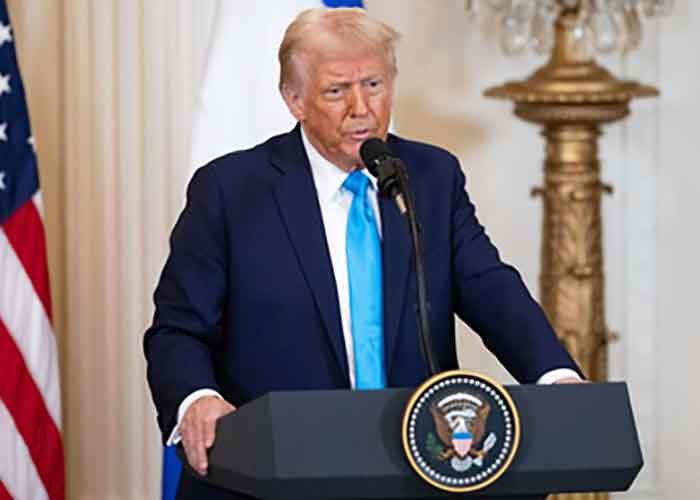
US President Donald Trump has defended the economic costs of the war with Iran, acknowledging that the conflict has pushed up oil prices while arguing that the financial burden on American households is justified by his administration’s objective of preventing Tehran from acquiring nuclear weapons.
In an interview with Florida television station WINK-TV, Trump described the increase in energy costs as a “small price to pay” for stopping Iran from obtaining a nuclear weapon. He also predicted that the conflict would end soon and that petrol prices would subsequently fall.
The remarks come ahead of the November 3 US midterm elections, with living costs emerging as a prominent political issue.
Responding to a question from anchor Claire Galt about high grocery bills and petrol prices averaging $4.18 per gallon in southwest Florida, Trump acknowledged that beef remained expensive and that oil prices had risen because of the conflict.
“Beef’s a little bit high and it’s coming down,” he said, suggesting that cattle production could delay a decline in prices.
Trump said he had anticipated an increase in energy costs before authorising military operations, describing the decision as a choice driven by security concerns.
“Iran cannot have a nuclear weapon. So, I’m honoured to have done it,” he said, reiterating his position that Tehran posed a serious nuclear threat.
The President offered no specific timeline for ending the war but said it could conclude “one way or another, through agreement or otherwise”, leaving open the possibility of continued military action.
Trump also claimed that oil shipments through the Strait of Hormuz had increased despite the conflict, attributing the movement to US military operations and the Navy’s presence in the region. The claim was not independently verified in the supplied material.
At a separate Republican rally in Fort Myers, he recalled petrol prices of $1.85 to $1.95 per gallon before the campaign and said preventing Iran from obtaining nuclear weapons had taken priority over the economic consequences.
 FOLLOW NOW