

New Delhi, September 10, 2026 (Yes Punjab News)
The Supreme Court on Thursday issued notice to the Uttar Pradesh government and senior officials of the state legislature on a plea challenging provisions that provide salaries, allowances, pension and other benefits to serving and former members of the Uttar Pradesh Legislative Assembly and Legislative Council.
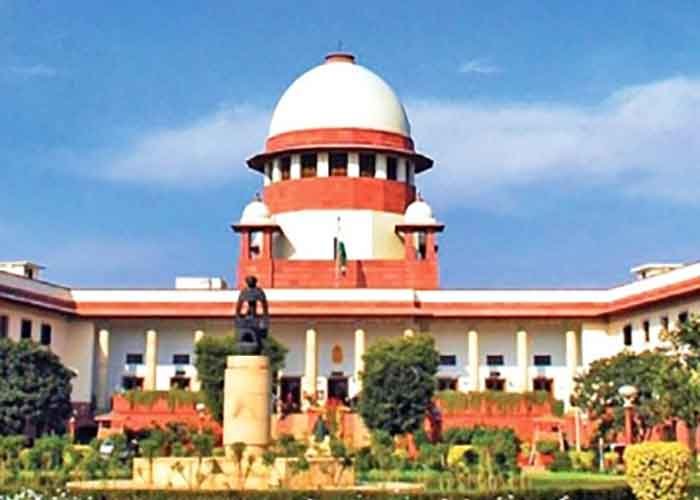
A Bench comprising Justices Vikram Nath and Sandeep Mehta issued notices to the Uttar Pradesh government and the Principal Secretaries of the Vidhan Sabha and Vidhan Parishad on the petition filed by Lok Prahari through its General Secretary, S.N. Shukla, who appeared in person.
The matter has been tentatively listed for hearing on October 9.
The petition challenges various provisions of the Uttar Pradesh State Legislature (Members’ Emoluments and Pension) Act, 1980. These include provisions relating to constituency allowance, railway coupons, journey and daily allowances, loans to legislators, and pensionary benefits available to former MLAs and MLCs and their families.
Lok Prahari has argued that Article 195 of the Constitution empowers state legislatures to provide salaries and allowances to their members but does not expressly provide for pension or post-retirement benefits.
The petitioner has sought directions to stop payment of pension and family pension to former legislators and their spouses, recover expenditure incurred under the allegedly illegal provisions, and establish an independent mechanism for recommending revisions in salaries and allowances.
The plea follows an Allahabad High Court judgment delivered on May 13, which dismissed a similar public interest litigation challenging the provisions. The High Court held that the legislation was within the competence of the state legislature and did not violate constitutional limitations.
A Division Bench of Justices Rajan Roy and Abdhesh Kumar Chaudhary had held that Article 195, read with Entry 38 of List II of the Seventh Schedule, empowered the state legislature to provide various allowances to its members.
The High Court also relied on the Supreme Court’s 2018 judgment in Lok Prahari v. Union of India, which dealt with similar challenges concerning pension and other benefits for Members of Parliament.
It noted that the Supreme Court had held that the term “allowances” in Entry 73 of List I was broad enough to encompass pension and other benefits for MPs and former MPs.
Rejecting the argument that pension could be granted only to government employees, the High Court referred to the Supreme Court’s observation that several categories of state payments are described as pensions, including old-age, widow and disability pensions.
The court also took note of rulings by the Gujarat, Madhya Pradesh and Rajasthan High Courts that had upheld pensionary benefits for legislators.
The Allahabad High Court held that determining the quantum of pension and allowances was primarily a matter of legislative policy and that courts could not interfere merely because they disagreed with the policy behind such benefits.
It observed that judicial review would be limited to cases involving manifest arbitrariness, unreasonableness or a clear constitutional violation. Holding that the challenge was essentially based on a policy disagreement rather than a demonstrable constitutional infirmity, the High Court dismissed the PIL.
 FOLLOW NOW