
New Delhi, August 14, 2026 (Yes Punjab News)
The Partition of 1947 remains one of the most traumatic episodes in the history of the Indian subcontinent. Millions of people were killed, displaced or separated from their homes and families, while countless others endured looting, abduction, forced conversion and other forms of violence.
The violence was particularly severe in areas that became part of Pakistan, including the North-West Frontier Province, Balochistan, Sindh and West Punjab. Yet, many accounts of the suffering experienced by communities in these regions have received comparatively limited attention in mainstream historical narratives.
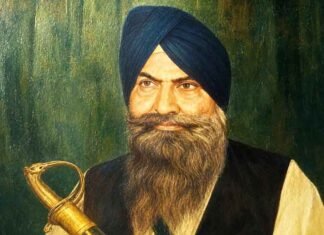
Among those who sought to preserve accounts of the violence was Sikh leader Master Tara Singh, along with scholars and survivors who recorded testimonies of those who experienced the upheaval.
Accounts relating to Sheikhupura, Thoha Khalsa and Muzaffarabad offer some of the starkest descriptions of the violence. They also document the difficult choices, courage and sacrifices of ordinary people caught amid the turmoil.
Sheikhupura Massacre
An account attributed to Ram Nath, an advocate and former member of the Sheikhupura Bar, describes the violence that followed Partition in the district.
According to his testimony, Sheikhupura had not previously witnessed communal riots and was regarded as a stronghold of non-Muslim communities. The last census cited in the account placed the Muslim population at around 68 per cent, Sikhs at 20 per cent and Hindus at 12 per cent. Sikhs were described as the most influential community in the district.
The testimony states that on August 15, 1947, Muslim officials and prominent non-officials assured non-Muslims that their lives, honour and property would be protected. Following Partition and the exercise of options by government employees, however, non-Muslim officials were removed and the police force became predominantly Muslim, according to the account.
A curfew was imposed by the District Magistrate on the evening of August 24. Ram Nath’s statement alleges that Muslim military personnel subsequently set a house on fire and continued their operations the following day.
The account describes violence across the old Sheikhupura settlement, with military personnel allegedly killing residents while others looted and burned non-Muslim homes.
At New Ihatas, the testimony alleges that Hindus and Sikhs were gathered and separated by gender. Young women were reportedly singled out, while their relatives were forced to watch. When a young man protested, the account states that men present were shot.
The testimony identifies a Sikh rice factory as the site of another major episode of violence. Men and women were reportedly separated, women were subjected to degrading treatment and large numbers of men were killed.
The statement claimed that around 10,000 men had been killed by August 26 and that large numbers of young women had been taken away. These figures and details come from the cited eyewitness testimony and require assessment alongside other contemporary historical records.
Muzaffarabad Massacre
Another survivor account was given by S. Khazan Singh, son of S. Chain Singh of Kotli village in Muzaffarabad district of Jammu and Kashmir.
Khazan Singh described an attack on his village by Pathan raiders in October 1947. He stated that around 20 people were killed in the initial assault, following which others fled towards the interior of the state.
According to his testimony, the fleeing Hindu and Sikh population was subsequently surrounded by armed raiders and taken towards Domel. Hindu and Sikh families from other villages and towns were also brought to the area.
The men were separated from women and children, he said. Khazan Singh described a subsequent massacre in which large numbers of men were shot and their bodies thrown into the river. He estimated that more than 1,000 people were killed.
He also stated that children were killed and that he himself was captured and forcibly converted to Islam. He eventually escaped after Pakistani military personnel intervened and took him to Pattan Khurd in Hazara district.
The account is presented as a survivor testimony, with Khazan Singh stating that he personally witnessed the events he later described in his formal statement.
Thoha Khalsa
Thoha Khalsa, a village in Rawalpindi district, has become one of the most enduring symbols of the suffering experienced by women during the Partition violence.
According to contemporary accounts, the village was surrounded by a large armed group. The residents attempted to defend themselves but were heavily outnumbered.
The accounts state that negotiations followed and the villagers were asked to pay Rs 10,000. After the payment, assurances were reportedly given that the village would not be attacked. The attackers allegedly returned the next day, demanded additional payment and killed around 40 defenders.
With the village’s men unable to continue the defence, the women reportedly confronted what they feared would be capture and violence. Around 90 women are said to have ended their lives by jumping into a well. Three were reportedly rescued.
The episode remains among the most painful accounts associated with the violence in Rawalpindi during Partition.
Remembering the Victims
Partition was more than a political division of territory. For millions, it meant the loss of homes, families, livelihoods and communities that had existed for generations.
Accounts from Sheikhupura, Muzaffarabad and Thoha Khalsa illustrate the human dimension of a tragedy often reduced to statistics. They recount the experiences of men, women and children who found themselves caught in extraordinary circumstances and subjected to violence, displacement and loss.
Remembering Partition should not become an exercise in hatred or revenge. It should instead encourage remembrance, preservation of testimony and an honest examination of historical evidence.
The experiences of all communities affected by Partition deserve to be remembered and studied. Preserving survivor accounts and placing them alongside contemporary records can help future generations understand the scale and human cost of the tragedy.
History cannot be changed, but it can be examined and remembered honestly. The stories of those who suffered should not disappear.
Remember the victims. Preserve their stories. Learn from the tragedy. Never again.
The article is authored by Mohisha Tuli, a Mass Communication and Journalism student currently pursuing postgraduate studies.
 FOLLOW NOW