

Vijayawada, August 25, 2026 (Yes Punjab News)
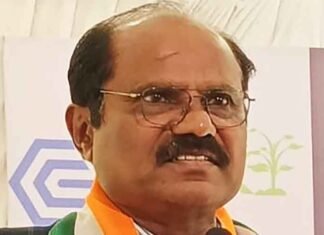
Former Andhra Pradesh High Court judge Tallapragada Mallikarjuna Rao was sworn in as the new Lokayukta of Andhra Pradesh on Tuesday.
Governor S. Abdul Nazeer administered the oath of office to Justice (Retd.) Mallikarjuna Rao at a ceremony held at Lok Bhavan. Chief Minister N. Chandrababu Naidu, Minister for Micro, Small and Medium Enterprises Kondapalli Srinivas and other dignitaries attended the ceremony.
The Governor had appointed Mallikarjuna Rao as Lokayukta last week under Section 3(1) of the AP Lokayukta Act, 1983, as amended by the AP Lokayukta (Amendment) Act, 2024, based on the recommendation of the selection committee.
According to a government order issued by Chief Secretary G. Sai Prasad, Mallikarjuna Rao will hold office for five years from the date of his appointment.
The appointment comes after a prolonged process to fill key vacancies in several statutory bodies. Earlier, Advocate General Dammalapati Srinivas had informed the Andhra Pradesh High Court that the appointments of chairpersons and members of the Lokayukta, Andhra Pradesh Human Rights Commission (APHRC) and Andhra Pradesh Electricity Regulatory Commission (APERC) were at different stages and would be completed soon.
He had said the Lokayukta selection had been completed by a committee headed by the Chief Minister and the file was awaiting the Governor’s approval.
Several public interest litigations had also sought directions for filling vacant positions in the Lokayukta, APHRC, APERC and State Consumer Disputes Redressal Commission (SCDRC).
In May, the Andhra Pradesh government constituted a high-level search committee to scrutinise applications and nominations for the Lokayukta appointment under the amended law. The committee was formed in accordance with the AP Lokayukta (Amendment) Act, 2024 and rules notified earlier this year.
Under the amended framework, the Lokayukta is to be appointed from among retired Chief Justices and retired High Court judges.
The selection committee is headed by the Chief Minister and includes the Speaker of the Legislative Assembly, the Home Minister or another minister nominated by the Chief Minister, the Leader of Opposition in the Assembly and the Chairperson of the Legislative Council.
 FOLLOW NOW