

New Delhi, September 8, 2026 (Yes Punjab News)
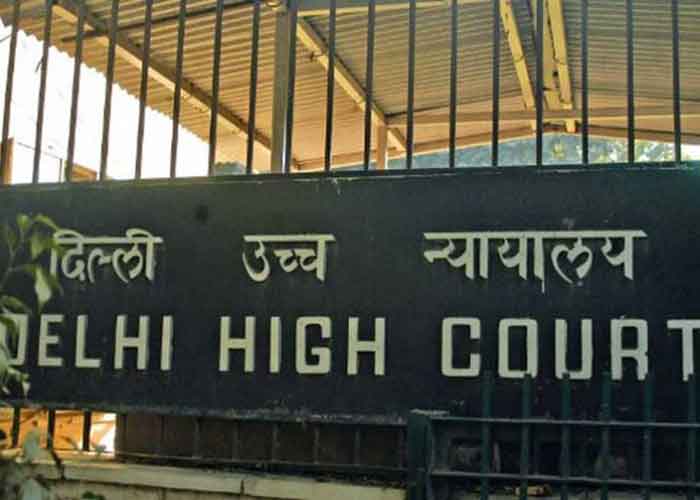
The Delhi High Court has disposed of contempt proceedings against Jamia Millia Islamia after the university assured the court that a second-floor toilet would be reserved exclusively for female faculty members, including female persons with disabilities (PwDs).
Justice Mini Pushkarna, hearing the contempt petition filed by senior JMI professor Prof Sujata Ashwarya, took note of the university’s undertaking that separate arrangements would also be made for male PwDs. The university said the designated facility would be made available within one week.
The contempt plea arose from a dispute over access to a hygienic and reasonably suitable restroom at JMI’s Centre for West Asian Studies. During the hearing, Ashwarya’s counsel, Advocate Mrinmoi Chatterjee, pointed out that the second-floor toilet, although designated for female faculty members and PwDs, was being shared by men and women and sought its exclusive reservation for women.
On instructions, JMI’s counsel assured the court that the facility would be designated exclusively for female faculty members and female PwDs.
The court also clarified that the toilet would be available to all female faculty members and that no individual would be permitted to keep it locked.
“In view of the aforesaid, no further orders are required to be passed in the present petition,” the High Court said while disposing of the contempt proceedings.
The dispute dates back to Ashwarya’s grievance over restroom facilities at the university. She had sought the designation of a standalone facility as a ladies’ toilet, citing hygiene concerns and a medical difficulty involving her knee that made squatting difficult. She had stated that the facility had a western-style commode.
In its March 13 order, the High Court had observed that the workplace grievance “ought never to have travelled beyond the administrative corridors” of the university. It had noted that Ashwarya, a senior professor with more than two decades of service, had previously used a restroom at the Centre for West Asian Studies, but access was later regulated and hygiene conditions allegedly deteriorated after it was opened for common use.
The university had subsequently initiated disciplinary proceedings against her, including issuing a show-cause notice, constituting a committee and directing her to submit a written apology.
While quashing those actions, the High Court had said the university appeared to have “lost sight of” the distinction between institutional discipline and addressing a grievance concerning hygiene and dignity. Justice Sanjeev Narula had observed that, “A complaint of this nature called for engagement, not escalation.”
The court had further held that access to clean, usable and dignified restroom facilities formed part of “elementary working conditions” and directed the JMI administration to reconsider Ashwarya’s grievance while keeping hygiene, privacy, dignity and her stated medical condition in view.
JMI later sought a review of the March 13 order, arguing, among other things, that adequate sanitation facilities were available and remedial measures had already been taken. Justice Narula dismissed the review petition on April 15, holding that the university had not demonstrated any error apparent on the face of the record warranting review.
The High Court had also observed that effective compliance with its earlier directions could be worked out by the parties in accordance with law, while remedies would remain open to Ashwarya if she maintained that there had been no effective compliance.
The latest order, recording JMI’s assurances on exclusive restroom access for female faculty and separate arrangements for male PwDs, brings the contempt proceedings to an end.
 FOLLOW NOW