
New Delhi, September 16, 2026 (Yes Punjab News)
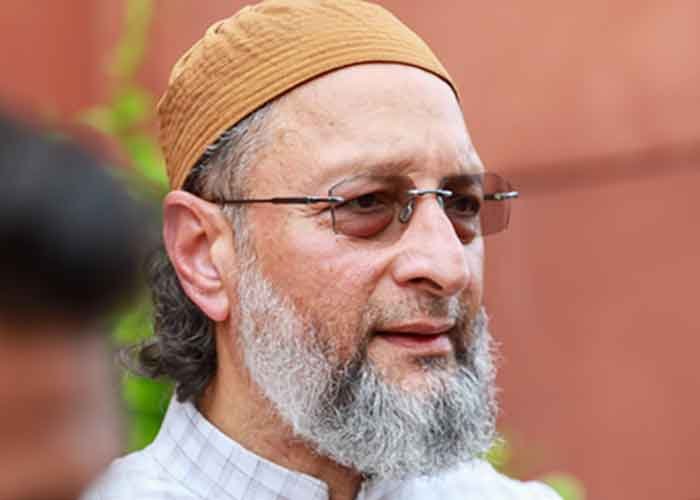
A political exchange over the Uniform Civil Code (UCC) intensified on Wednesday, with BJP leaders hitting back at AIMIM president Asaduddin Owaisi after he opposed the proposed rollout of the common civil code in NDA-ruled states.
The latest remarks followed Union Home Minister Amit Shah’s announcement that the UCC would be implemented in all 21 states governed by the BJP-led NDA before the 2029 Lok Sabha elections.
Owaisi has alleged that the proposed UCC is not aimed at equality but at targeting Muslims. He has also argued that India’s pluralistic character must be protected and alleged that the BJP and RSS were seeking to impose Hindu laws on non-Hindus.
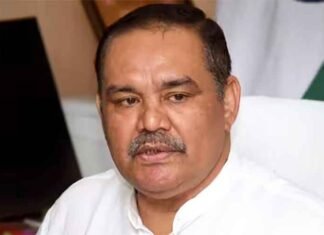
Responding to the AIMIM chief, Madhya Pradesh Minister Vishwas Sarang said the UCC would establish common legal provisions for citizens, including in matters related to marriage.
“It is now certain that no one in the country will be able to have two, three or four marriages. The same will apply in Madhya Pradesh as well. This is why Asaduddin Owaisi is so upset. If Muslim women are receiving protection and their interests are being safeguarded, then why is Asaduddin Owaisi upset?” Sarang told IANS.
“I had already said that there should be no talk of division. The UCC has been implemented and will remain in force,” he added.
BJP MP Gulam Ali Khatana also defended the proposed common civil law, saying there was no reason for concern in a democratic system.
“There is no need to worry about this. India is a democracy, and governments take decisions based on the people’s wishes,” Khatana said.
He argued that laws should apply uniformly to citizens and questioned the opposition to a common legal framework.
BJP national spokesperson Guru Prakash accused Owaisi of misleading people about the proposed legislation.
“You are misleading people and lying. It is a Common Civil Code. Who told you that it will be based on Hindu rules? It will be equal for everyone, universal for everyone,” Guru Prakash told IANS.
Addressing Owaisi, he said, “You are a barrister, Owaisi ji. If you think there is a problem, go and file an affidavit in court.”
Guru Prakash also alleged that opposition to the UCC was creating fear among sections of society and described the measure as a constitutional objective of the government.
Uttar Pradesh Minister Narendra Kashyap said Owaisi should examine the provisions of the UCC before opposing it.
“Perhaps Owaisi sahib has not read the UCC law. He should know that the UCC law is not for any one religion or caste; it is for everyone,” Kashyap said.
He said the proposed law was intended to promote social equality and accused Owaisi of viewing laws through a Hindu-Muslim lens.
Madhya Pradesh BJP MLA Rameshwar Sharma also criticised Owaisi and questioned his opposition to the UCC, while making references to Congress leader Rahul Gandhi.
Sharma asked why Owaisi and Gandhi opposed a common civil law and alleged that their positions were linked to electoral considerations. He also criticised Owaisi’s remarks about the proposed law being based on Hindu practices.
The UCC remains a politically contested issue, with supporters arguing that common civil provisions would provide uniformity in personal laws, while opponents have raised concerns about religious freedom, pluralism and the impact on community-specific practices.
Uttarakhand became the first state to implement a modern UCC, with its law coming into force in January 2025. Gujarat, Assam and Madhya Pradesh have also passed UCC legislation, although their laws were awaiting the remaining approval or notification steps cited in the source material before full implementation.
The debate follows Shah’s recent statement that the NDA’s 21 state governments would introduce the UCC before 2029, giving fresh political momentum to an issue that has remained a subject of discussion over the scope of personal laws, equality and religious freedom.
 FOLLOW NOW