

Ushering in Transparency, Enhancing Accountability of Public Charitable Trusts and Strengthening the RTI Framework
Tax exemptions are public money; large trusts must answer under RTI, KBS Sidhu urges Centre, offers to draft the amendment Bill
Chandigarh, 28 October 2026 (Yes Punjab News)
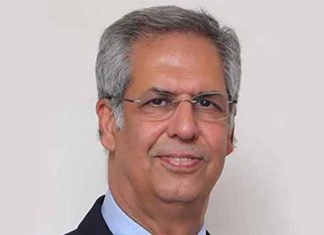
Public charitable trusts that receive no direct grants or aid from the government are, as the law stands, generally outside the purview of the Right to Information Act, 2005. Yet they are financed by the public exchequer all the same, through income tax exemptions granted both to the trusts and to their donors. KBS Sidhu, former Special Chief Secretary, Government of Punjab, has therefore urged the Union Government to amend the Act so that large trusts of this kind are expressly brought within it.
In a letter to Dr. Jitendra Singh, Minister of State in the Prime Minister’s Office and for Personnel, Public Grievances and Pensions, whose Ministry is the nodal Ministry for the RTI Act, KBS Sidhu has proposed an amendment to Section 2(h) of the Act, which defines a “public authority”. He has offered to submit a draft amendment Bill if the Ministry so desires.
Public money, given at both ends
KBS Sidhu pointed out that the state finances a tax-exempt charitable trust on two counts. A donor who gives to an approved trust deducts the donation from his taxable income, so the exchequer forgoes tax on every rupee given. A trust that meets the conditions of the law and applies its income to its objects pays no tax on that income at all. “Neither is a gift from the trustees. Both are revenue that would otherwise have reached the Consolidated Fund of India,” he said. The Union Budget itself, in its annual Statement of Revenue Impact of Tax Incentives, counts such concessions as revenue forgone.
The law is settled; the rule is missing
The Supreme Court has held, in Thalappalam Service Co-operative Bank (2013) and D.A.V. College Trust (2019), that a body “substantially financed, directly or indirectly” by the government is a public authority under the Act, and that land given free or at a heavy discount counts as such financing. In May this year, the Punjab and Haryana High Court applied that principle to hold the Chandigarh Golf Club a public authority because of the concessional terms on which it holds public land.
But whether tax exemptions alone amount to substantial financing remains, at best, a grey area, and a citizen who wishes to test it must go to court and wait for years. “Where the law is ambiguous on a matter of such public consequence, it is for Parliament to make it clear. Sunlight is the best of disinfectants,” KBS Sidhu said.
A charity is for everyone
Income tax law grants the exemption because a trust’s purpose is public, and broadly denies it to a trust meant for one religious community or caste alone. “A tax-exempt charity exists, in law, for everyone, irrespective of caste, creed or colour. If every citizen is a potential beneficiary, and every taxpayer bears the cost of the exemption, every citizen has a right to know how it is run,” he said.
Oversight today is thin. Only a few States, Maharashtra among them, have a Charity Commissioner, and income tax scrutiny of a trust’s affairs is confidential. KBS Sidhu cited recent public disputes inside some of the country’s largest trusts, the Tata Trusts among them, as showing how little the public can know about institutions of great national consequence. “I make no imputation of wrongdoing against any of them. The point is only that, as things stand, nobody outside can tell.”
Five suggestions
1. Amend Section 2(h) so that a public charitable trust, society or not-for-profit company is expressly a public authority if the tax exemptions enjoyed by it and its donors, or public land held on concessional terms, or grants received, exceed a prescribed threshold.
2. Set the threshold high enough that small village and community trusts are not burdened.
3. Require proactive disclosure of trustees, audited accounts, major grants and related-party transactions.
4. Rely on the Act’s existing exemptions to protect personal privacy and genuine commercial confidentiality, so that donors and beneficiaries suffer no intrusion.
5. Advise Union Ministries and State Governments, in the meantime, to make RTI coverage a condition of any future concessional land allotment or grant to a trust.
“The RTI Act has just completed twenty-one years. A large part of public life is now carried on not by government but by trusts that run our hospitals, universities and research institutes, and some that control great industrial enterprises. The Act should follow public money wherever it goes, whether it is spent as a grant or given up as a tax exemption,” KBS Sidhu said.

KBS Sidhu, IAS (Retd.), served as Special Chief Secretary, Government of Punjab. He is Founder-Editor of The KBS Chronicle and Convener of the Shiromani Punjab Forum.
Contact: KBS Sidhu · kbs.sidhu@gmail.com · +91 78370 01001
 FOLLOW NOW