
Haridwar, October 28, 2026 (Yes Punjab News)
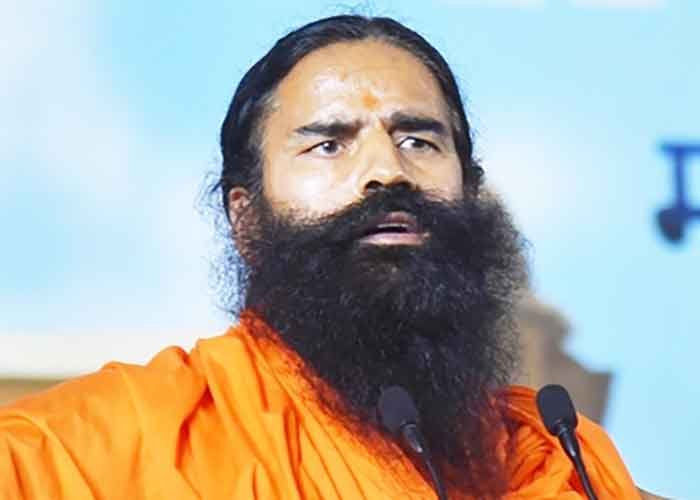
Yoga guru Baba Ramdev on Wednesday alleged that planned and systematic attacks were being carried out against Sanatan Dharma through what he described as false and derogatory portrayals of Hindu deities. He also accused certain groups of distorting historical narratives to undermine the religion and urged people to reject what he termed divisive propaganda.
Speaking to reporters, Ramdev claimed that Lord Ram and Goddess Sita were being falsely portrayed as consumers of alcohol and meat, while Lord Shiva was depicted as an addict and a consumer of cannabis and bhang.
He also objected to what he described as the misrepresentation of Lord Krishna’s Rasleela, allegations concerning Lord Brahma and attempts to portray Hindu deities as immoral.
“By taking shelter of certain texts within Sanatan Dharma, over the past 1,000 years, during the Mughal period and the British era, opponents and heretics of Sanatan Dharma interpolated our scriptures to demean Sanatan Dharma,” Ramdev alleged.
The yoga guru further criticised narratives that, according to him, sought to create divisions among Hindu deities based on wealth and social status.
“In recent days, an even more unfortunate statement was made, claiming that Ram is the God of the rich, that 56 delicacies, offerings and adornments are presented to him, while Shiva is the God of the poor. These wicked people have even created a divide between rich and poor among the Gods!” he said.
Ramdev alleged that contradictory narratives were being propagated by people who questioned the existence of Hindu deities while simultaneously making claims about their personal lives.
He also made assertions about the ancestry of India’s Muslim population, stating that many Muslims acknowledged having ancestors who followed Hindu traditions. Ramdev claimed that more than 150 crore followers of Sanatan Dharma lived worldwide, adding that the figure would exceed 200 crore if the concept of Akhand Bharat were taken into account. These figures were claims made by the yoga guru and were not independently established in his remarks.
Addressing the debate over the Aryan migration theory, Ramdev rejected the proposition that Aryans migrated to India from outside the country. He said his travels abroad had strengthened his belief that people from India had travelled to other parts of the world.
“I have travelled all over the world, and I asked people everywhere: ‘Did Aryans go to India from your place?’ They replied, ‘No, people from India came to our place,’” he said.
Ramdev identified the pursuit of knowledge, employment opportunities and business expansion as three broad reasons for migration. He cited scholars travelling abroad to spread knowledge, comparing their efforts with his own international campaigns to promote yoga.
He also argued that people often moved overseas in search of employment when opportunities were limited in their home countries, while others migrated to establish or expand businesses.
Ramdev alleged that narratives suggesting Aryans originated outside India, promoting the concept of “original inhabitants” and targeting Brahmins through slogans such as “Brahmins, leave India” were intended to divide society.
“All these false narratives are being peddled in this country. But we are saying one clear thing: Aryans did not come from outside. There was no conflict between Aryans and Dravidians in this country,” he said.
His remarks come amid continuing debates over religious traditions, interpretations of ancient scriptures and competing historical accounts concerning India’s cultural and social origins.
 FOLLOW NOW