
New Delhi, October 9, 2026 (Yes Punjab News)
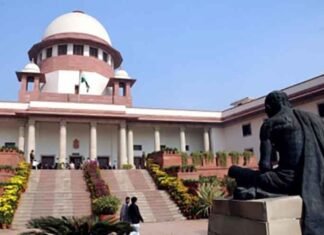
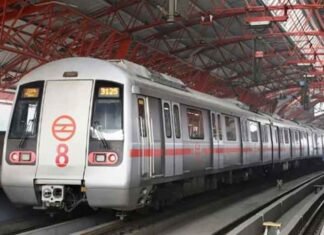
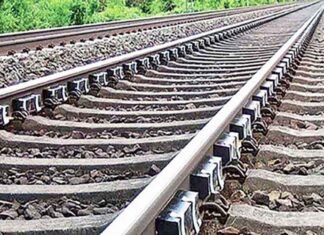
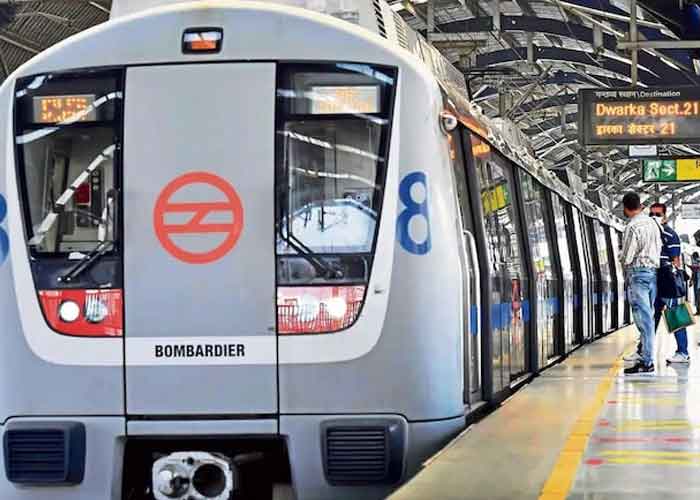
The Supreme Court on Friday ruled out a complete shutdown of Metro train services ahead of a proposed protest in the national capital on Saturday, directing the Centre to ensure that Metro and other railway services operate under appropriate restrictions to minimise inconvenience to commuters.
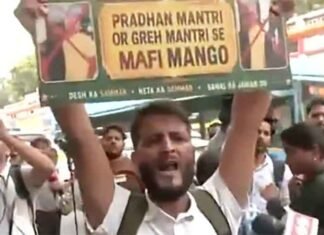
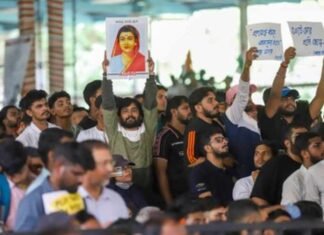
A Bench comprising Chief Justice of India Surya Kant and Justices Joymalya Bagchi and V. Mohana passed the order after Solicitor General Tushar Mehta assured the court that the authorities would reconsider restrictions imposed in view of a demonstration planned by the Cockroach Janta Party (CJP), which is seeking accountability from Chief Election Commissioner Gyanesh Kumar.
The court said the central issue was whether completely suspending Metro and railway services at certain stations would constitute a proportionate restriction in response to the proposed protest.
Emphasising the principle of proportionality, the Bench observed that completely prohibiting movement was different from regulating services and said preventive measures should be assessed accordingly.
Mehta, the Centre’s second-highest law officer, agreed to impress upon the authorities the need to permit the regulated movement of Metro trains and other railway services to prevent unnecessary hardship for Delhi residents and commuters.
“ In terms of that assurance, we make it clear that there shall be no complete prohibition on the movement of metro trains,” the Supreme Court said in its order.
The Bench also directed the authorities to publicise their decision on regulated transport operations widely so that passengers could plan their journeys accordingly. It further ordered the publication of a traffic advisory for people travelling within Delhi to prevent avoidable inconvenience.
Alternative protest venue under consideration
During the hearing, the Solicitor General agreed to consider a proposal to identify an alternative venue equipped with the necessary facilities for peaceful and lawful demonstrations.
The Bench asked the Centre to examine the suggestion and take an appropriate decision on designating a suitable location for such protests.
The court’s intervention came amid concerns over the proposed closure of 57 Metro stations and the cancellation or rescheduling of several trains scheduled to arrive at New Delhi and Hazrat Nizamuddin railway stations on October 10.
The Delhi Police has refused permission for the proposed demonstration, citing public safety, traffic management and law-and-order concerns. It has also stated that Section 163 of the Bharatiya Nagarik Suraksha Sanhita (BNSS) remains in force in the New Delhi area.
The Supreme Court granted the protest organisers liberty to approach it through an urgent petition, noting that no such petition had been filed at the time of the hearing.
 FOLLOW NOW