
Chandigarh, August 6, 2026 (Yes Punjab News)
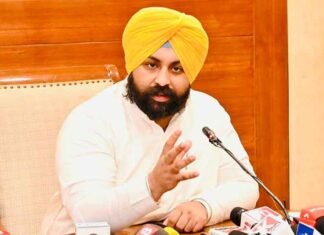
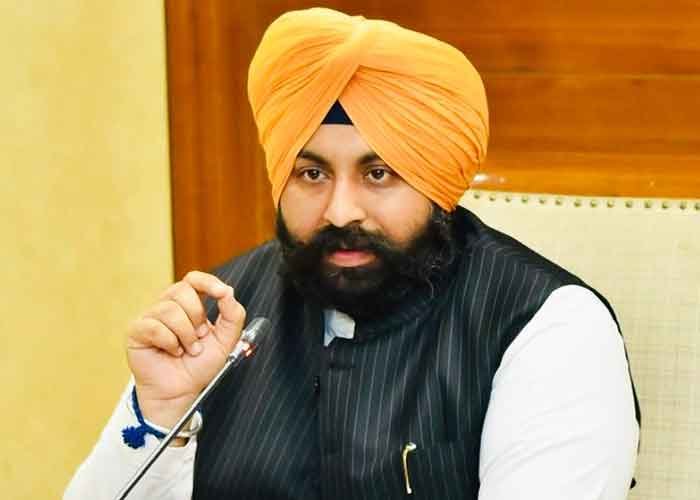
Punjab School Education Minister Harjot Singh Bains on Thursday claimed that the state has emerged as the top-ranked performer in the NITI Aayog School Education Quality Index (SEQI) 2026, surpassing Kerala, while presenting a four-year report on the transformation of the state’s government school system in the Punjab Vidhan Sabha.
Participating in a discussion on an education-related resolution moved by MLA Prof. Jaswant Singh Gajjanmajra, Bains highlighted the changes undertaken by the Aam Aadmi Party government since assuming office in July 2022.
He said that when the government took charge, more than 8,000 government schools lacked boundary walls, around 3,200 schools had no functional toilets, and nearly four lakh students were forced to sit on classroom floors due to inadequate infrastructure.
The minister said these deficiencies have been systematically addressed through infrastructure development, adding that ₹2,638 crore has been invested in upgrading 19,125 government schools, while an additional ₹1,000 crore in World Bank assistance has been approved for further improvements.
AI Introduced as Core Subject
Bains said Punjab has become the first state in the country to introduce Artificial Intelligence (AI) as a core subject from Classes I to XII, describing it as a major educational reform aimed at preparing students for future technologies.
He also stated that the government has streamlined textbook distribution, ensuring books now reach district headquarters by February 15 and are distributed to schools before the commencement of the academic session.
Mission Samarth Covers 12 Lakh Students
Highlighting the state’s flagship Mission Samarth, Bains said the programme focuses on foundational literacy and numeracy through level-based learning rather than conventional grade-based teaching.
According to him, the initiative now benefits nearly 12 lakh students and involves over 70,000 teachers annually.
Recalling his visits to government schools in 2022, the minister said many students in higher classes lacked basic reading, writing and arithmetic skills. He said targeted academic interventions have helped bridge these learning gaps.
Rise in Government School NEET Success
The minister attributed a sharp increase in NEET success among government school students to the Punjab Academic Coaching for Excellence (PACE) programme.
He said the number of NEET-UG qualifiers from Punjab government schools has increased from 80 in 2021 to 882 in 2026.
Bains cited examples from Majitha, where six government school students qualified for NEET, and Dinanagar, where 17 students cleared the examination. He also highlighted the achievement of Harnoorpreet Kaur, who secured an All India Rank of 3140 in her category.
Opposition Criticism
Responding to criticism over government schools, Bains said political attacks should be directed at him rather than educational institutions.
“Target me if you want, but do not target government schools,” he said, alleging that a negative narrative had discouraged many parents from enrolling their children in public schools.
Addressing concerns over declining enrolment, he argued that the trend was not unique to Punjab and reflected a nationwide post-pandemic pattern. He also referred to the implementation of the APAAR ID system, saying it has eliminated duplicate enrolments and improved the accuracy of student records.
Schools of Eminence Upgraded
The minister said several Schools of Eminence have undergone significant redevelopment. Referring to the Shaheed Sukhdev Thapar School of Eminence in Ludhiana, he said the institution is being upgraded with an investment of ₹18 crore and that 17 students from the school qualified for NEET this year.
Bains said the Punjab government aims to make government schools the first choice for parents by strengthening infrastructure, improving teaching quality and ensuring adequate financial support for schools.
He added that schools now receive sufficient funding, eliminating the need for teachers to seek donations to meet operational requirements.
 FOLLOW NOW