New Delhi, September 24, 2026 (Yes Punjab News)
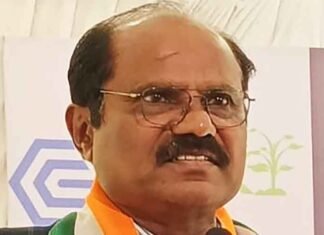
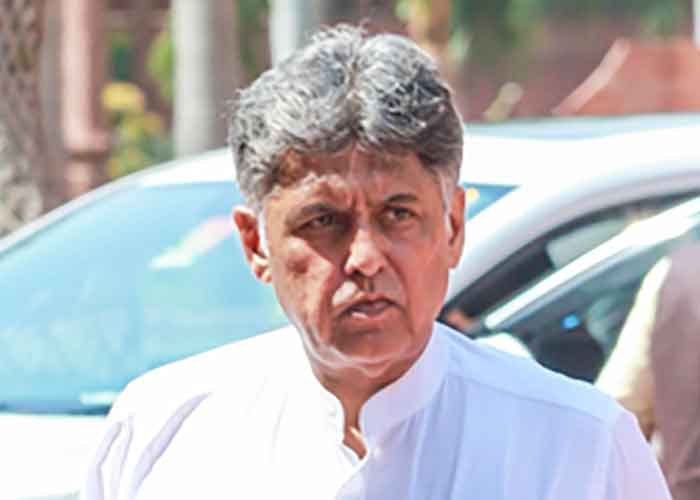
Congress MP Manish Tewari on Thursday demanded the resignation of Chief Election Commissioner Gyanesh Kumar and called for a Joint Parliamentary Committee (JPC) to examine the functioning of the Election Commission of India (ECI), citing reported internal objections over decisions related to the Special Intensive Revision (SIR).
Speaking to IANS, Tewari referred to the 1993 appointment of Election Commissioners G.V.K. Krishnamurthy and Sardar Manohar Singh Gill, which was challenged in the Supreme Court by then Chief Election Commissioner T.N. Seshan.
Tewari said the Supreme Court had held that decisions in the Election Commission should be taken through consensus or, where consensus was not possible, by majority.
“The basic question is that when two Election Commissioners, G.V.K. Krishnamurthy and Sardar Manohar Singh Gill, were appointed in 1993, T.N. Seshan, the Chief Election Commissioner, had challenged their appointment in the Supreme Court. At that time, the Supreme Court had said that whatever happens, it should happen after full consensus, or if consensus is not reached, then things should be decided by a majority. Decisions will be taken on this basis only,” Tewari said.
He claimed that if two Election Commissioners had disagreed with decisions taken by CEC Gyanesh Kumar, those decisions would be “illegal and unconstitutional”.
Tewari also claimed that the SIR exercise had resulted in around 13 crore people being removed from electoral rolls and described it as the “biggest disenfranchisement” in the world.
“If 13 crore people were removed from their voting rights due to SIR, then the biggest disenfranchisement would have happened in the world. The number of people removed is larger than the population of many countries,” he said.
Calling the reported developments serious, Tewari said Gyanesh Kumar should resign.
“It is a serious matter. After the revelations, the ECI did not even reject the allegations and instead gave strange statements. Gyanesh Kumar should resign. If he does not resign, a Joint Parliamentary Committee should be constituted to examine the functioning of the Election Commission,” he said.
Tewari added that questions had previously been raised about the ECI by people outside the institution, but the reported objections from within the Commission made the issue more serious.
“Earlier, questions were raised by outsiders, but this time, questions are being raised from within. The questions are quite serious,” he said.
On the controversy surrounding the mimicry of Prime Minister Narendra Modi at an event attended by Leader of Opposition in the Lok Sabha Rahul Gandhi, Tewari said satire was an integral part of democratic discourse.
“The unfortunate thing nowadays is that an opinion is formed about everything from a very narrow perspective. In the context of any democratic country, satire is an integral part,” he said.
Tewari cited India’s democratic history and said satire, cartoons and political commentary had also been used against ruling parties around the time of Independence and subsequently in newspapers and television.
However, he added that satire should have “a limit and dignity”.
Speaking about suicides linked to the drug problem in Punjab, Tewari said Pakistan had adopted a different strategy against India after terrorism was brought under control in the state in 1995.
“After terrorism was brought under control in Punjab in 1995, Pakistan started a new war against India through Punjab. The aim was to somehow provide narcotic substances to the younger generation of India and crush their potential, their energy and their youth,” he alleged.
 FOLLOW NOW