New Delhi, September 24, 2026 (Yes Punjab News)
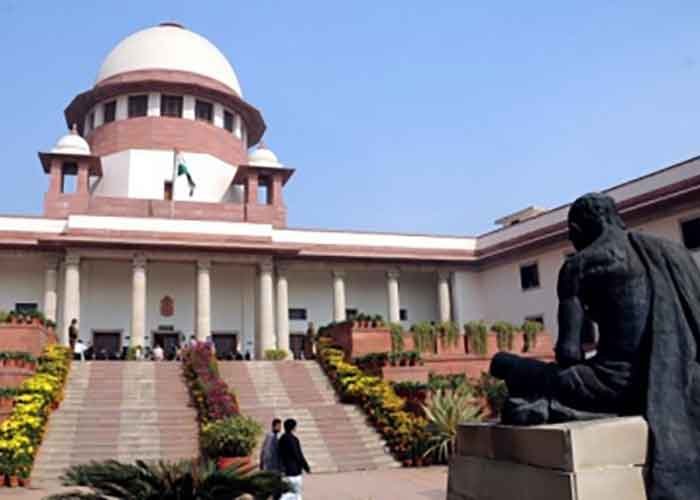
The Supreme Court on Thursday upheld the conviction of a man for repeatedly raping his six-year-old stepdaughter and throttling her to death, but commuted his death sentence to imprisonment for the remainder of his natural life without remission, citing mitigating circumstances and the possibility of reformation.
A bench of Justices Vikram Nath, Sandeep Mehta and Vijay Bishnoi held that the prosecution had established the offences under Sections 302, 376(2)(f), 376(2)(n), 376AB and 201 of the Indian Penal Code (IPC), along with Sections 5 and 6 of the Protection of Children from Sexual Offences (POCSO) Act, beyond reasonable doubt.
The bench said the crime was of “the utmost gravity” and involved the sustained sexual violation of a child by her guardian and her killing to conceal the offence. However, it held that the mitigating circumstances and the possibility of reformation meant the death sentence could not be sustained.
“We are of the view that this is not a case in which the sentence of death ought to be sustained,” the court said.
The Supreme Court said imprisonment for the remainder of the convict’s natural life without remission was available as an alternative and was adequate considering the gravity of the crime. It held that an ordinary life sentence carrying the prospect of remission after 14 years would be inadequate in the circumstances.
“The gravity of the crime, and in particular the sustained sexual violation of a child by her guardian and her killing to conceal that violation, is such that a sentence of imprisonment for life carrying the ordinary prospect of remission after fourteen years would be wholly inadequate to the ends of justice,” the judgment said.
The court commuted the death sentence imposed under Sections 302 and 376AB of the IPC to imprisonment for the remainder of his natural life without remission. The other sentences and fines imposed for the remaining offences were upheld, with all substantive sentences directed to run concurrently.
The case concerned the prosecution of Waris for allegedly repeatedly sexually assaulting his stepdaughter inside the family home and subsequently throttling her to death. The victim’s mother, who was the appellant’s wife, was the sole eyewitness to the events inside the house.
The Supreme Court noted that the child was about six years old and that the offences took place within the matrimonial home. The post-mortem examination found that she died of asphyxia caused by throttling and recorded a fresh tear at the fourchette with oozing of blood, which the autopsy surgeon opined was indicative of sexual assault.
The trial court had convicted Waris and sentenced him to death under Sections 376AB and 302 of the IPC. The Madhya Pradesh High Court subsequently upheld the conviction and confirmed the death sentence, holding that the case fell within the category of the rarest of rare cases.
During the proceedings before the Supreme Court, an issue arose over the manner in which the victim’s mother had been cross-examined at trial. The legal aid counsel representing the appellant had been appointed on the same day the witness’s evidence was recorded.
The Supreme Court subsequently directed further cross-examination of the witness in 2025, observing that the original procedure had caused prejudice to the appellant in relation to her cross-examination. The further cross-examination was conducted on June 14, 2025, by counsel of the appellant’s choice after the defence was provided the complete record in advance.
The bench later held that the defect had been adequately remedied. It also relied on the medical evidence and the mother’s testimony in affirming the conviction.
The court recorded that the medical evidence independently established that the child’s death was homicidal and caused by manual strangulation, while the injury noted during the post-mortem examination was consistent with recent penetrative sexual assault.
On sentencing, the Supreme Court noted that the appellant had spent about eight years in custody, including seven years under the shadow of the death sentence. It held that the prosecution had not excluded the possibility of his reformation and concluded that imprisonment for the whole of his remaining natural life without remission would meet the ends of justice.
The court described the substituted sentence as “a sentence of the utmost severity, second only to the sentence of death” and said it would keep the appellant in prison for the remainder of his life without the prospect of release through remission.
“It is a sentence proportionate to the gravity of his crime, and it reflects the abhorrence with which the law regards what he did, while stopping short of the taking of his life in a case in which the possibility of his reformation has not been foreclosed,” the bench said.
 FOLLOW NOW