
New Delhi, October 26, 2026 (Yes Punjab News)
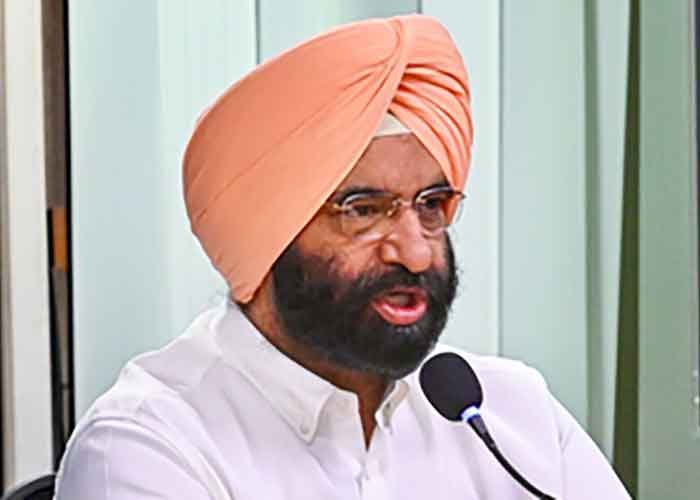
Delhi Environment, Forest and Wildlife Minister Manjinder Singh Sirsa on Monday credited public participation and coordinated efforts by government agencies, police and neighbouring states for the national Capital recording air quality in the ‘moderate’ category.
“I thank the people of Delhi today. Even today, the AQI is ‘moderate’, around 180, while yesterday it was 153. The Delhi government, our colleagues in the Municipal Corporation, Delhi Traffic Police and the citizens of Delhi have continuously provided tremendous support,” Sirsa said.
According to the Central Pollution Control Board (CPCB), Delhi recorded an Air Quality Index (AQI) of 187 at 8 a.m. on Monday, placing the city in the ‘moderate’ category.
The overall reading indicated relatively moderate air quality, although several monitoring stations continued to record high pollution levels, highlighting significant variations across the city.
Burari recorded an AQI of 128, followed by Badarpur at 125, Nangloi at 150, Jawaharlal Nehru University (JNU) at 157 and Mandir Marg at 165.
In contrast, higher readings were reported at Jahangirpuri (251), R.K. Puram (233), CRRI Mathura Road (231), Punjabi Bagh (229), Narela (227), Mundka (226) and Vivek Vihar (240).
Sirsa attributed the improvement in Delhi’s air quality to public cooperation and efforts to prevent polluting vehicles from entering the city.
“I especially want to thank the neighbouring states and the police officers of neighbouring districts. For the past three days, you must have seen that the police there have continuously been preventing polluting vehicles from entering Delhi,” he added.
Meanwhile, Delhi Minister Parvesh Verma addressed concerns over the reappearance of white foam in the Yamuna ahead of Chhath Puja. Visuals on Saturday showed foam spreading across a stretch of the river near Okhla Barrage and flowing towards Kalindi Kunj.
Verma said foam was not visible along the 52-kilometre stretch of the Yamuna within Delhi, claiming that it appeared near the point where the city’s boundary meets Uttar Pradesh.
“The length of the Yamuna in Delhi is 52 kilometres. There is no foam anywhere along these 52 kilometres. Where Delhi’s boundary ends and Uttar Pradesh begins, there is only an endpoint where foam is visible because there is a very large waterfall there,” he said.
He added that the foam formed when water fell from a height.
Verma also said preparations for Chhath Puja had been strengthened, with more ghats being developed across Delhi. He said the Delhi Jal Board would provide clean water at the ghats and that tenders for the preparations had already been completed.
The reappearance of white foam near Kalindi Kunj has renewed attention on the Yamuna’s persistent pollution concerns. The development comes days after Delhi Chief Minister Rekha Gupta praised government initiatives aimed at rejuvenating the river and described the inauguration of infrastructure projects worth approximately Rs 9,000 crore as a joyful occasion for residents.
Delhi’s air pollution continues to be driven in part by fine particulate matter, including PM2.5 and PM10. While some monitoring stations have recorded comparatively lower pollution levels, several locations continue to report elevated readings.
Last week, the Commission for Air Quality Management (CAQM) invoked Stage 1 measures under the Graded Response Action Plan (GRAP) after air quality in Delhi-NCR deteriorated to the ‘poor’ category.
Under Stage 1, the use of coal and firewood in tandoors at hotels, restaurants and open-air eateries is prohibited. The operation of diesel generator sets is also restricted, except for essential and emergency requirements.
 FOLLOW NOW