
Ranchi, October 27, 2026 (Yes Punjab News)
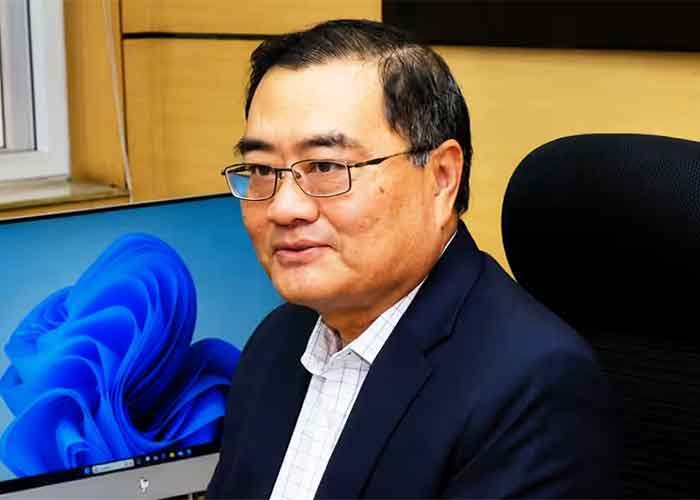
A special court in Ranchi on Tuesday cleared the way for the trial of 12 accused, including former Jharkhand Public Service Commission (JPSC) Chairman L. Khiangte and former Deputy Examination Controller Shweta Kumari Gupta, in a high-profile examination scam.
The court took cognisance of a 97-page charge sheet filed by the Criminal Investigation Department (CID) after the state government granted prosecution sanction. The next hearing has been scheduled for November 10.
The other accused include Ramveer Singh, director of private examination agency TDPL; its marketing manager and alleged mastermind Abhay Kumar Tiwari; agency employees Mohammed Usman and Mohammed Ebad; and Hemant Kumar Verma, Pradeep Kumar Singh, Sanjay Kumar, Suman Saurabh and Arvind Kumar.
All 12 accused were arrested in July and August this year. They remain in judicial custody after their bail pleas were rejected. They appeared before the special court through video conferencing from Birsa Munda Central Jail in Hotwar on Tuesday.
According to the charge sheet and case diary submitted to the court, the CID investigation has uncovered what investigators describe as a well-organised examination racket involving alleged bribery, leakage of confidential examination data and manipulation of selection procedures.
Based on digital evidence, forensic reports and call detail records, investigators have alleged that candidates were charged around Rs 5 lakh for clearing the preliminary examination, while assurances of final selection allegedly fetched between Rs 10 lakh and Rs 25 lakh.
The investigation further alleges that Khiangte used serial numbers of Rs 10 currency notes as a code for financial transactions linked to the alleged scam.
The CID has also claimed that contracts were awarded to blacklisted companies without following the tendering process in exchange for Rs 2 crore in cash and a commission of 10 per cent on total billings.
Investigators have cited travel records and mobile-location data that allegedly indicate the delivery of Rs 2.5 lakh in cash to Khiangte’s residence in Aizawl, Mizoram.
According to the charge sheet, searches at the former chairman’s office and among his personal belongings led to the recovery of a confidential list of 15 successful candidates and eight original admit cards belonging to candidates appearing for the Forest Range Officer main examination. Ten of the candidates whose admit cards were recovered were allegedly selected later.
Another major allegation concerns the purported advance leakage of confidential data relating to the 14th JPSC preliminary examination.
The CID has alleged that before the official announcement of the results, former Deputy Examination Controller Shweta Kumari Gupta shared sensitive information, including the complete database of selected candidates, with TDPL employee Mohammed Usman through WhatsApp.
Technical analysis of chat records allegedly showed that details of 267 selected candidates had been shared in advance. Of these, 146 candidates were reportedly from Bihar, 82 from Uttar Pradesh and 14 from Haryana.
The charge sheet also alleges that information relating to main examination questions, answers and category-wise cut-off marks was leaked before its official release.
Investigators have further claimed that alleged mastermind Abhay Kumar Tiwari leased an entire hotel near Ranchi railway station for 11 months. The premises were allegedly used as a secret operational base to accommodate ineligible candidates and facilitate the manipulation of Optical Mark Recognition (OMR) sheets.
The recovery of unsealed original OMR sheets and their videography from the examination strong room has also been cited by investigators as evidence of alleged lapses or deliberate breaches in security protocols.
The CID has additionally alleged that, shortly before his arrest, Khiangte attempted to destroy digital evidence by formatting his mobile phone and damaging his laptop.
These allegations form part of the charge sheet now before the court. The trial proceedings are expected to examine the evidence and determine the criminal liability, if any, of the accused.
 FOLLOW NOW