
New Delhi, September 28, 2026 (Yes Punjab News)
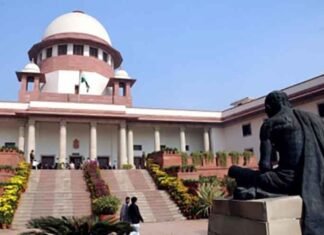
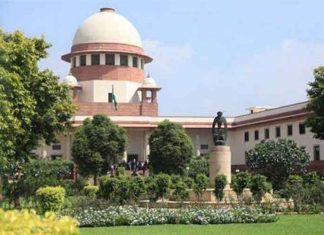
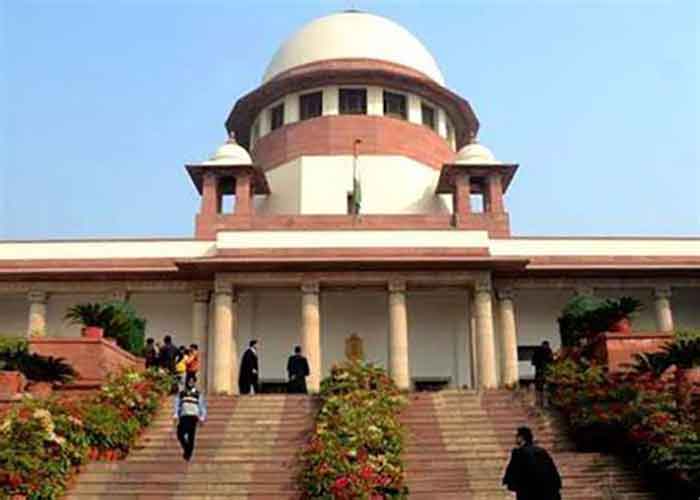
The Supreme Court on Monday sought responses from the Centre and key financial regulators on a petition challenging the imposition of Merchant Discount Rate (MDR) on specified Unified Payments Interface (UPI) transactions above Rs 2,000, but declined to grant an interim stay on the framework.
A Bench headed by Chief Justice Surya Kant, along with Justices Joymalya Bagchi and V. Mohana, issued notices to the Union government, the Reserve Bank of India (RBI), the National Payments Corporation of India (NPCI) and the UPI & Services Steering Committee, seeking their responses within four weeks.
The petition, filed by advocate Anjan Datta through advocate Ashutosh Dubey, challenges the Centre’s September 14 Gazette notification issued under Section 10A of the Payment and Settlement Systems Act, 2007, and the framework announced the following day for levying MDR on specified person-to-merchant (P2M) UPI transactions above Rs 2,000.
Appearing for the Centre, Additional Solicitor General N. Venkataraman told the court that the charges would come into effect from October 15 and that 96 per cent of transactions would remain unaffected. He said charges for essential services had been capped at Rs 5 and argued that the proposed levy was a settlement fee between payment aggregators and banks, with no revenue accruing to the government.
The Centre submitted that banks incur costs in processing electronic payments and that the levy was intended to support the long-term sustainability of the UPI ecosystem.
The petitioner sought an interim stay, arguing that the framework could impose an arbitrary financial burden and create scope for corruption. The Bench, however, declined to suspend its implementation at this stage and directed the respondents to place relevant facts and material on affidavit. The matter is scheduled to be heard after four weeks.
The plea questions the proposed MDR of 0.4 per cent on eligible transactions above Rs 2,000, subject to a cap of Rs 300 for transactions of Rs 75,000 and above, with separate rates for certain sectors.
The petitioner has argued that the framework is arbitrary and discriminatory, questioning the basis for the transaction threshold, monthly-receipt classifications, sector-specific rates and fee cap. The plea also raises concerns over the role of the UPI & Services Steering Committee in determining rates and classifications, contending that such decisions require clear statutory authority, transparency and regulatory oversight.
It seeks disclosure of the complete decision-making record, including the legal basis, cost studies, methodology, committee minutes and safeguards governing the levy. The petitioner has also sought the quashing or suspension of the framework or, alternatively, its reconsideration following transparent consultation, publication of supporting data and an impact assessment, particularly for micro and small enterprises.
The Centre has maintained that the revised framework is intended to fund payment infrastructure, cybersecurity and support for small merchants, including those in smaller towns and rural areas. It has said that UPI will remain free for customers and that person-to-person transactions will continue to be exempt from charges, regardless of the amount.
According to the government, merchants receiving up to Rs 1 lakh per month through UPI QR codes will continue to pay no charges, while more than 95 per cent of merchant payments below Rs 2,000 will remain free. The RBI has also described the levy on large-value merchant transactions as a measure to strengthen the digital payments ecosystem while keeping UPI free for users.
 FOLLOW NOW