
New Delhi, September 27, 2026 (Yes Punjab News)
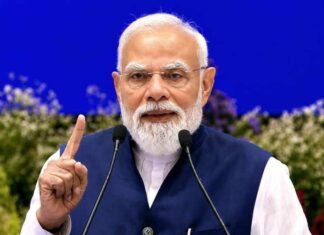
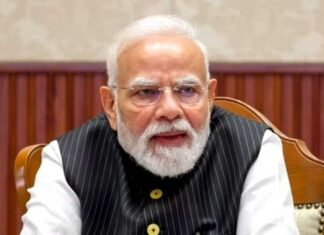
Prime Minister Narendra Modi on Sunday highlighted the historical resilience of Gujarat’s Modhera, drawing a link between the destruction of its famed Sun Temple and the village’s transformation into India’s first 24×7 solar-powered village.
Addressing the 138th episode of his monthly radio programme Mann Ki Baat, Modi recalled the Somnath Swabhiman Parv held earlier this year and said India had begun 2026 by celebrating its civilisational heritage.
He said the history of Modhera’s Sun Temple ran parallel to that of the Somnath temple, noting that both faced attacks around the same period. According to Modi, the Modhera temple was built during the reign of Raja Bhimdev I and was attacked around the time of Mahmud Ghazni’s 1026 invasion of Somnath.
“when Somnath was attacked by Ghazni in 1026, the famous Surya Mandir (Sun Temple) in Modhera, Gujarat, was also attacked in the same period and was destroyed,” Modi said, adding that Bhimdev I subsequently rebuilt the temple.
The Prime Minister said the repeated reconstruction of temples such as Somnath reflected the resilience that enabled India’s cultural heritage to survive successive attacks. He also referred to later attacks on the Modhera Sun Temple, including during the reign of Alauddin Khilji.
Modi then connected Modhera’s association with the Sun to its present-day identity as a renewable-energy model. He said the village was now known not only for its historic temple but also as the country’s first solar village.
Modhera was officially declared India’s first 24×7 solar-powered village in 2022. The project included a ground-mounted solar power plant and more than 1,300 rooftop solar systems on residential and government buildings, integrated with battery energy storage systems.
Modi said the transformation demonstrated how the traditional reverence for the Sun could be connected with modern concepts of light, energy and science.
The Modhera Sun Temple, an 11th-century Solanki-era monument, is recognised for its distinctive architecture and astronomical alignment. Gujarat Tourism records it as having been built during the reign of Raja Bhimdev I.
 FOLLOW NOW