
Beijing, August 15, 2026 (Yes Punjab News)
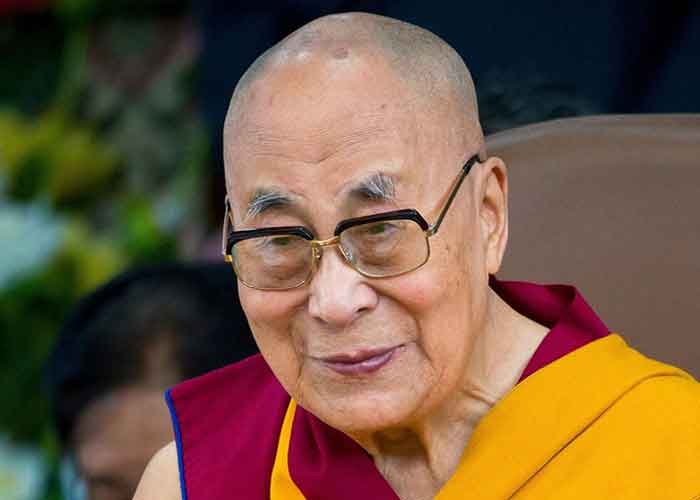
China’s efforts to influence the selection of the next Dalai Lama are raising concerns over religious freedom and the autonomy of Tibetan Buddhist institutions, according to a report published by Providence.
The report argues that while the Chinese government repeatedly maintains that it protects freedom of religious belief, its efforts to control the reincarnation of the Dalai Lama raise questions about the extent of that freedom.
For Tibetan Buddhists, the recognition of reincarnated lamas is central to the continuity of religious teachings and spiritual succession. The report said that preventing the Tibetan Buddhist community from determining its own spiritual leadership could undermine the principle of religious autonomy.
“Few episodes in modern political history are as darkly ironic as an officially atheist regime attempting to preside over a religious ritual whose underlying beliefs it explicitly rejects,” the report said, referring to the Chinese Communist Party’s efforts to determine the identity and legitimacy of the next Dalai Lama.
It noted that the CCP continues to describe religion in highly restrictive terms while seeking authority over the succession of Tibetan Buddhism’s highest spiritual leader.
According to the report, Beijing has in recent years intensified policies promoting a “shared consciousness of the Chinese nation”, alongside legislative and administrative measures aimed at greater assimilation of ethnic minorities.
It cited the Law on the Promotion of Ethnic Unity, adopted during China’s annual “Two Sessions” and which came into force last month, as another step in institutionalising what it described as the government’s assimilation policies.
The report argued that under such policies, religious, linguistic and cultural differences risk being treated less as forms of diversity requiring protection and more as elements to be incorporated into a single national identity.
It further warned that state control over the selection of the next Dalai Lama could preserve the institution’s outward structure while changing its religious character. A spiritual leader whose authority is derived from the state rather than the religious community, it said, could face questions over his legitimacy.
“Over time, the institution may remain, but its meaning will have been emptied; the outward form will survive, while its soul has been removed,” the report said.
The report also placed the issue in a broader context, arguing that the succession of the Dalai Lama is not solely a matter concerning Tibetan Buddhism. It said the controversy raises questions about religious freedom, the limits of state authority and the ability of distinct cultural and religious communities to preserve their traditions.
 FOLLOW NOW