

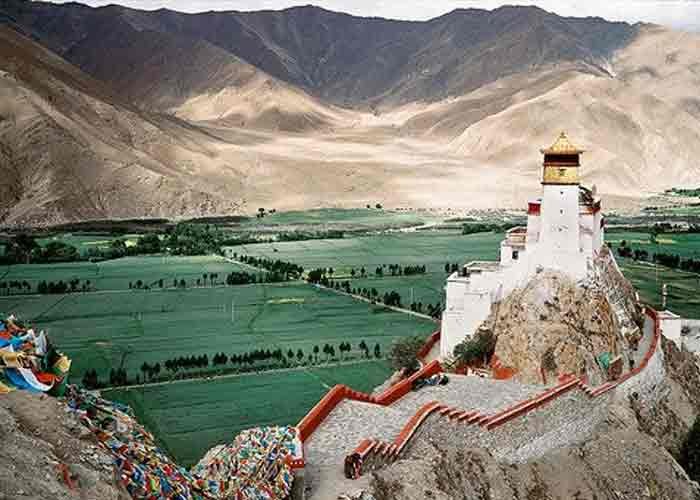
China has maintained control over Tibet for more than seven decades, with the region holding considerable strategic importance because of its location between China and South Asia. Often referred to as the “Third Pole” because of its vast glaciers, Tibet is also the source of major Asian rivers, including the Brahmaputra, Mekong and Yangtze, making it crucial to China’s long-term water security.
According to Tibet Express, Beijing has invested heavily in highways, railways and airbases in the region, strengthening its strategic and military presence.
The CCP describes Tibet as an inseparable part of China, a position reinforced through state policy, education and propaganda. The report noted that any loss of control over Tibet could challenge Beijing’s broader narrative of national unity.
Khedroob Thondup, nephew of the Dalai Lama, said China’s position on Tibet was closely linked to the CCP’s understanding of sovereignty and territorial integrity. He argued that meaningful political change within China, including democratisation or decentralisation, could potentially create space for greater Tibetan autonomy.
Meanwhile, Ryan Fioresi, executive director of the International Campaign for Tibet (ICT), has raised concerns over what he described as worsening human rights conditions in Tibet.
Speaking to IANS, Fioresi said Beijing’s Ethnic Unity and Progress Law, which came into force on July 1, had given legal backing to policies that he alleged were aimed at weakening Tibet’s distinct cultural identity.
The ICT has urged governments, the United Nations and religious leaders to raise concerns over the legislation and press Beijing to resume dialogue with the Dalai Lama or his representatives.
The Chinese government has consistently maintained that Tibet is an integral part of China and rejects allegations of forced assimilation and human rights abuses.
 FOLLOW NOW