

Seven years after the abrogation of Article 370, Jammu and Kashmir is increasingly emerging as a region driven by infrastructure development, economic integration and expanding connectivity, according to a report by India Blooms News Service, which highlights the Union Territory’s changing development landscape.
The report says the transformation has been fuelled by a combination of improved transport infrastructure, rising investments, tourism growth, hydropower development and government-backed employment and entrepreneurship initiatives, rather than any single project or policy intervention.
According to the Jammu and Kashmir Economic Survey 2025-26, the Union Territory’s real Gross State Domestic Product (GSDP) is projected to grow by 5.82 per cent during 2025-26, with nominal GSDP estimated at ₹2.86 lakh crore and per capita income at ₹1,68,243.
While the services sector remains the largest contributor to Gross State Value Added (61.02 per cent), the report notes that agriculture, horticulture, manufacturing, tourism, construction and energy are increasingly contributing to economic activity and employment, creating a more diversified economy.
Agriculture continues to support a large section of the population, with initiatives such as high-density plantations, Farmer Producer Organisations (FPOs) and the Holistic Agriculture Development Plan helping modernise the rural economy and improve market access.
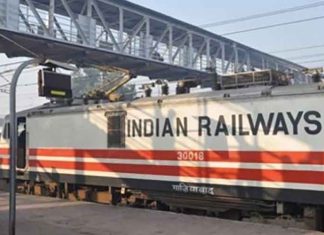
A major milestone cited in the report is the completion of the 272-km Udhampur-Srinagar-Baramulla Rail Link (USBRL) in June 2025, which connected the Kashmir Valley with India’s national railway network for the first time. Landmark engineering projects, including the Chenab Rail Bridge and Anji Bridge, alongside the introduction and expansion of Vande Bharat train services, have significantly improved passenger and freight movement.
The report states that the Jammu-Srinagar Vande Bharat service, extended to Jammu Tawi in April 2026 and expanded to 20 coaches, carried 44,727 passengers within its first ten days of operation. Improved rail connectivity has also facilitated faster transportation of apples and other agricultural produce to markets across India, while enabling smoother supply of essential commodities into the Valley.
Road infrastructure has also witnessed substantial progress. The report highlights ongoing work on the Jammu and Srinagar Semi Ring Roads and notes that the Zojila Tunnel achieved a major breakthrough in June 2026. Once completed, the tunnel is expected to provide year-round connectivity between Jammu and Kashmir and Ladakh, boosting trade, tourism and regional mobility.
Tourism has emerged as one of the strongest drivers of the region’s economy. Official figures cited in the report show that Jammu and Kashmir recorded more than 2.3 crore tourist arrivals in 2024, the highest ever, with improved road, rail and air connectivity supporting growth across hospitality, transport, handicrafts and local businesses.
To accommodate rising passenger traffic, the Union Cabinet approved construction of a new civil enclave at Srinagar International Airport in February 2026 at an estimated cost of ₹1,677 crore. The proposed terminal, spread over 71,500 square metres, is designed to handle around 10 million passengers annually.
Investment inflows have also accelerated. According to the report, Jammu and Kashmir attracted approximately ₹18,000 crore in investments between 2016-17 and 2025-26, compared with around ₹8,000 crore during the preceding decades. It attributes this growth to industrial reforms, infrastructure expansion and an improved business environment, with the Economic Survey recording a “Top Achiever” ranking for the Union Territory in the national Ease of Doing Business assessment.
Employment generation has been another key focus area. Government data cited in the report indicate that over 41,000 government jobs were created between 2019 and May 2026, while more than 9.81 lakh people benefited from self-employment schemes over the previous four years.
The report also highlights Mission YUVA, under which the government aims to establish 1.37 lakh enterprises and generate approximately 4.25 lakh jobs over five years through entrepreneurship promotion, skill development and employment-focused interventions.
The power sector is also expected to play a significant role in future growth. With abundant hydropower potential, Jammu and Kashmir has projected ₹7,100 crore in non-tax revenue from the power sector in the 2026-27 Budget, accounting for nearly 64 per cent of the government’s own non-tax revenue. The J&K Hydro Power Policy 2025 is expected to further strengthen investment and industrial development.
The report notes that the Union Territory’s 2026-27 Budget projects GSDP at ₹3,15,822 crore, representing a 9.5 per cent increase over the revised estimates for 2025-26, while capital expenditure has been pegged at ₹25,236 crore, reflecting continued emphasis on infrastructure creation.
Alongside infrastructure spending, the report says the government has allocated funds for education, crop insurance, upgraded Anganwadi centres, welfare programmes and support for vulnerable sections, indicating a balanced approach to physical and social development.
According to the report, the cumulative impact of these initiatives is steadily reshaping Jammu and Kashmir’s economic profile. With stronger transport links, growing investment, record tourism, expanding employment opportunities and improved infrastructure, the Union Territory is becoming increasingly integrated with India’s broader economic network.
 FOLLOW NOW