

Srinagar, August 6, 2026 (Yes Punjab News)
A report comparing governance and development on either side of the Line of Control (LoC) has argued that differences in democratic institutions, infrastructure development and public welfare have contributed to growing unrest in Pakistan-occupied Kashmir (PoK), while Jammu and Kashmir has witnessed significant political and economic changes in recent years.
According to the report, the former princely state of Jammu and Kashmir was divided following the tribal invasion backed by Pakistan in 1947 after Maharaja Hari Singh signed the Instrument of Accession with India. The report states that areas including Muzaffarabad, Gilgit and Baltistan came under Pakistan’s control, while the remaining territory became part of India.
It contends that Jammu and Kashmir evolved under India’s democratic framework, whereas PoK has remained under a governance structure heavily influenced by Pakistan’s military establishment.
The report claims that despite having elected governments, political authority in PoK has remained limited, with key administrative decisions influenced by Islamabad. It contrasts this with the evolution of democratic institutions in Jammu and Kashmir, including elected governments, local self-governance and expanded implementation of central welfare schemes.
Highlighting developments following the abrogation of Article 370 in August 2019, the report says reforms have included the extension of central laws and welfare programmes, strengthening of Panchayati Raj institutions, district development councils, expanded investment opportunities, and greater property rights for women.
It also points to infrastructure expansion, improved connectivity, tourism growth and wider implementation of flagship schemes such as Ayushman Bharat as factors contributing to the region’s changing socio-economic landscape.
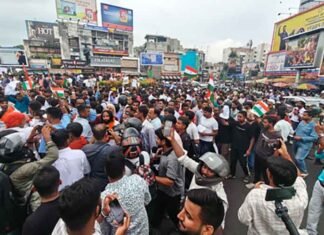
The report argues that these governance and development differences have widened the contrast between Jammu and Kashmir and PoK, where protests over political representation, governance and economic issues have intensified in recent years.
The analysis presents these developments as evidence of diverging trajectories on the two sides of the LoC, with governance models and development outcomes increasingly shaping public discourse.
 FOLLOW NOW