
New Delhi, September 16, 2026 (Yes Punjab News)
The Taliban has acknowledged limited progress under the Doha Process, while continuing to view the UN-led mechanism as an important channel for engagement with the international community.
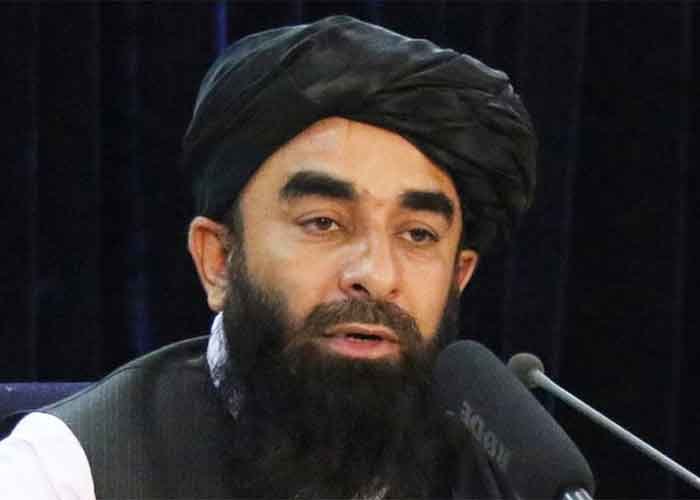
Taliban spokesperson Zabihullah Mujahid told Afghanistan’s Tolo News this week that although the process had begun well, it had so far failed to achieve its intended objectives, with limited progress in social and economic cooperation and several of Kabul’s expectations remaining unmet.
Mujahid said the process had not been completed and needed to continue to achieve the objectives for which it was established.
His comments came around seven months after Rosemary DiCarlo, UN Under-Secretary-General for Political and Peacebuilding Affairs, visited Afghanistan for three days and held discussions with Taliban officials on the Doha Process and its working groups.
The process, launched by the United Nations in 2023, has so far included three rounds of meetings involving special representatives for Afghanistan, besides working-group meetings aimed at facilitating engagement between Kabul and the international community.
The Taliban did not participate in the first two rounds. It was excluded from the May 2023 launch, while it declined to attend the February 2024 meeting after its demands for recognition as Afghanistan’s sole representative, exclusion of women and civil society representatives, and a high-level UN meeting were not accepted.
The Taliban eventually participated in the third meeting, held from June 30 to July 1, 2024, sending a five-member delegation led by Mujahid. The meeting, however, ended without a major breakthrough and drew criticism over the exclusion of Afghan women and civil society representatives.
Despite the limited progress, the Doha Process remains the principal diplomatic framework for structured engagement with Afghanistan’s current authorities. The United Nations Assistance Mission in Afghanistan (UNAMA) has also described it as the main framework for dialogue on issues concerning the country.
Qatar’s capital was selected as the venue because of its history of hosting peace negotiations and its ability to bring together diverse stakeholders. Qatar had previously hosted negotiations between the United States and the Taliban that resulted in the 2020 Doha Agreement.
The Doha Process was designed to provide a structured platform involving the Taliban, international actors and regional stakeholders, while attempting to balance pragmatic engagement with UN principles concerning human rights, counterterrorism and humanitarian access.
By 2026, the process has yielded some technical cooperation, particularly in areas such as counternarcotics and humanitarian assistance, although fundamental disagreements over human rights and governance continue to limit broader progress.
In February 2026, Afghan professionals participated in a UN Office on Drugs and Crime (UNODC)-led visit to Jakarta under the Doha Process Counternarcotics Working Group. The discussions focused on evidence-based drug prevention and treatment and were seen as an example of incremental cooperation in technical areas.
UN officials reiterated in March and June that the Doha Process remained the principal channel for structured dialogue on Afghanistan.
Human rights, particularly restrictions affecting women and girls, remain a major obstacle to wider international engagement. At the same time, Afghanistan has recorded some economic activity and infrastructure investment, although unemployment, falling household incomes and environmental pressures continue to affect the population.
Afghanistan’s strategic location also keeps it central to regional and international diplomatic calculations. The landlocked country lies at the intersection of South and Central Asia and borders Pakistan, Iran, Turkmenistan, Uzbekistan, Tajikistan and China.
For India, Afghanistan remains significant from the perspectives of regional security, counterterrorism, economic connectivity and its wider engagement with South and Central Asia.
Afghanistan’s economic situation remains fragile, with border closures involving Pakistan and instability in neighbouring Iran adding to existing pressures. Rising commodity prices and the challenge of reintegrating nearly six million Afghans who have returned to the country since 2023 have further increased the need for sustained international engagement.
Official reports have pointed to improvements in revenue mobilisation and infrastructure investment despite sanctions. However, economic vulnerabilities and concerns over governance and human rights continue to complicate efforts to establish broader international engagement with Kabul.
The date for the fourth Doha meeting on Afghanistan has not yet been announced. Its continuation is nevertheless expected to remain an important issue in discussions between the Taliban authorities and international stakeholders.
 FOLLOW NOW