
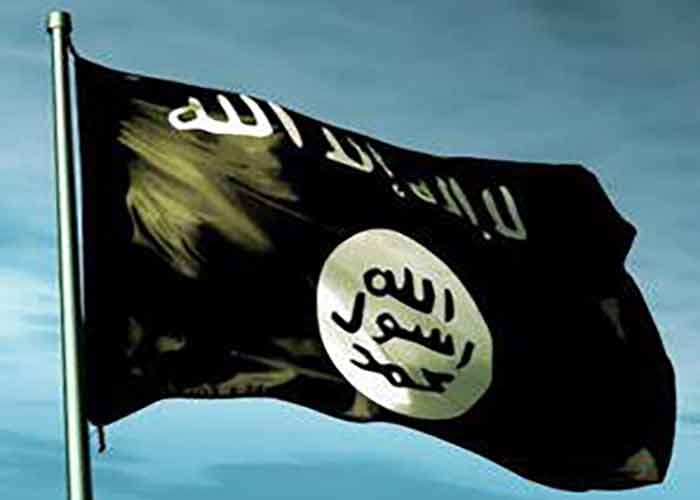
New Delhi, September 16, 2026 (Yes Punjab News)
Security agencies have flagged what officials describe as a shift in the Islamic State’s activities in South India, with the terror outfit increasingly focusing on radicalisation and propaganda rather than establishing conventional terror modules for carrying out attacks.
According to officials, Tamil Nadu and Kerala have remained areas of concern over radicalisation for several years. Security agencies are now particularly concerned about what they describe as newer methods being used by extremist groups to spread their ideology.
An official said the Islamic State, through its propaganda channels, has been encouraging followers to focus on ideological radicalisation rather than forming organised modules to execute attacks.
An Intelligence Bureau official described the trend as particularly difficult to counter, pointing out that conventional terror modules and lone-wolf attackers can leave investigative trails.
The official said the challenge is different when dealing with individuals who have been radicalised, as the primary concern is the gradual spread of an extremist mindset rather than an identifiable operational network.
Security agencies, however, are not ruling out the possibility of lone-wolf attacks by highly radicalised individuals. Officials have pointed to previous incidents, including the Coimbatore blast, as an indication of the potential threat posed by individuals acting independently.
The shift towards an emphasis on radicalisation gained attention following the weakening of the National Thowheed Jamath (NTJ), an organisation linked to the Easter Sunday bombings in Sri Lanka.
Before the attacks, then-NTJ chief Mohammed Bahrain Hashim had reportedly visited Tamil Nadu on several occasions and attempted to establish terror modules. Following his death, the organisation subsequently weakened significantly.
Officials said the Islamic State has since emerged as a major extremist threat in parts of South India and has sought to occupy the space left by groups such as the Popular Front of India (PFI) and NTJ.
According to an official, similarities in the ideological positions propagated by these organisations helped the Islamic State attract some former followers of the PFI and NTJ.
The official said the PFI and NTJ had propagated jihad and advocated the establishment of an Islamic state and Sharia law, positions that also feature in Islamic State ideology.
Officials said the Islamic State’s current approach places greater emphasis on propaganda and individual radicalisation, which they believe can be more difficult for security agencies to detect than organised terror networks.
The outfit has also advised followers to avoid assembling in large groups to discuss its ideology. Instead, according to officials, ideological discussions are encouraged in smaller settings involving two people, including at restaurants, workplaces, colleges or other events.
Large gatherings can attract the attention of security agencies, making smaller interactions harder to detect, officials said.
The Islamic State is also using propaganda outlets and encrypted communication channels while encouraging followers to spread its ideology through word-of-mouth networks, according to officials.
Security agencies believe that the continued spread of extremist ideology presents a significant challenge even in the absence of an immediately identifiable terror module.
 FOLLOW NOW