

New Delhi, September 16, 2026 (Yes Punjab News)
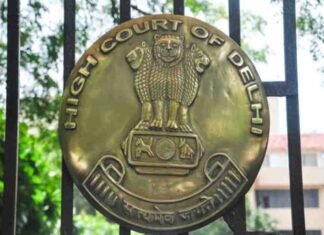
The Delhi High Court on Wednesday sought to know whether the Centre is considering a policy to examine the “addiction-causing” design architecture used by social media platforms.
A Bench of Justices Nitin Wasudeo Sambre and Amit Sharma asked Additional Solicitor General Chetan Sharma to obtain instructions from the Central government on the issue and deferred the hearing for three weeks.
The court was hearing a Public Interest Litigation filed by Dr Vikas Kathuria, Professor of Law and Head of the Centre on Law, Regulation and Technology at BML Munjal University.
The petition raises concerns over design features used by social media platforms, including infinite scrolling, autoplay, algorithmically curated and personalised feeds, notification systems and variable-reward engagement mechanisms such as “likes”.
During the hearing, ASG Sharma urged the court not to enter into the issue, submitting that the relief sought in the PIL fell within the domain of government policy.
He suggested that the petition could instead be treated as a representation before the Union government and considered within a fixed timeframe.
“The petition can be treated as a representation. There can be a time-bound schedule for the government (to examine such a representation),” Sharma submitted.
The Bench, however, questioned whether the High Court could direct the government to formulate a policy within a stipulated period and asked whether the Centre was already considering such a policy.
“How can we say, ‘you frame policies in a time-bound manner’? If you are saying so, then it is fine. Are you contemplating framing a policy?” the court asked.
Sharma told the Bench that he would need to obtain instructions on whether the Central government was actively considering such a policy.
The court subsequently deferred the matter for three weeks, asking the ASG to seek instructions and clarify the government’s position.
“We will defer it by three weeks. You (ASG Sharma) take instructions and tell us whether you are contemplating or not. We will not say anything in the matter. Renotify,” the court said.
The PIL argues that the concern is not limited to the nature of content available on social media but also extends to the underlying design of platforms, which the petitioner alleges is structured to capture, retain and repeatedly stimulate users’ attention.
According to the plea, features such as infinite scrolling, autoplay and algorithmically curated recommendation feeds can encourage prolonged and repeated engagement.
Kathuria, who has a six-year-old child, has described the issue as one of “grave public importance”, particularly in relation to children and young people growing up in an increasingly digital environment.
The petition also states that engagement-maximising design can affect both adults and minors, although children are considered a particularly vulnerable category.
The respondents named in the PIL include the Ministry of Electronics and Information Technology, Ministry of Women and Child Development, Ministry of Education, Ministry of Health and Family Welfare, National Commission for Protection of Child Rights, Meta Platforms, Alphabet/Google, Snap, X Corp and Telegram.
The plea cites, among other sources, the Economic Survey 2025-26, which raised concerns over digital addiction and its possible impact on academic performance and workplace productivity through distractions, sleep deprivation and reduced concentration.
It also refers to concerns surrounding mental health among people in the 15-24 age group, along with issues such as compulsive scrolling, social comparison and gaming disorders.
The petitioner contends that existing legal provisions primarily deal with unlawful or harmful content and do not specifically regulate or examine social media design architecture as a separate issue.
The plea refers to the Information Technology (Intermediary Guidelines and Digital Media Ethics Code) Rules, 2021, the Protection of Children from Sexual Offences Act, 2012, the Digital Personal Data Protection Act, 2023, and the Supreme Court’s judgment in Just Rights for Children Alliance v. S. Harish.
It argues that these existing legal and regulatory measures do not directly address the design-related concerns raised in the PIL.
The petitioner has sought examination of the issue by an appropriate expert body, including an assessment of the impact of engagement-maximising design features and consideration of an appropriate regulatory framework.
The petition was filed through the chambers of advocate Kartika Sharma.
 FOLLOW NOW