New Delhi, August 13, 2026 (Yes Punjab News)
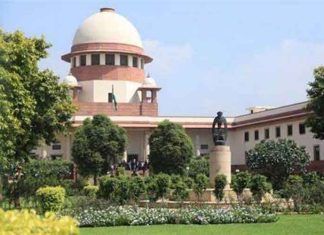
The Supreme Court on Thursday gave the Centre six weeks to place on record a draft policy providing concessional railway travel facilities to acid attack survivors who require repeated journeys for medical treatment.
The direction came after Additional Solicitor General Archana Pathak Dave, appearing for the Centre, informed a bench headed by Chief Justice of India Surya Kant that the Railway Board had agreed in principle to extend concessions to acid attack survivors under the existing “patient category”.
Dave said the policy was still being formulated, including the mechanism for providing the concession and the period for which it would remain available.
The bench, also comprising Justice Joymalya Bagchi and Justice V. Mohana, directed the Centre to submit the draft policy within six weeks.
The petitioner, Atijeevan Society, pointed out that the existing patient-category concession has limitations. According to the petitioner, the facility is generally linked to travel between a specified originating station and destination, whereas acid attack survivors may need to visit hospitals in different cities during the course of treatment.
The petitioner also highlighted the difficulty of repeatedly obtaining concession certificates from different hospitals, particularly during the initial months following an acid attack when medical intervention may be urgently required.
Atijeevan Society further sought an emergency ticket quota for acid attack survivors who need to travel at short notice. The suggestion received support from the bench, with the petitioner stressing that delays in accessing treatment could undermine the purpose of the medical care.
The Centre said these aspects could be examined while framing the policy. However, it opposed extending the concession under the disabled category, citing the need to distinguish between different categories of disability.
The government also agreed to share the draft policy with Atijeevan Society before placing it before the Supreme Court, allowing the organisation to submit its suggestions.
 FOLLOW NOW