

Chandigarh, September 17, 2026 (Yes Punjab News)
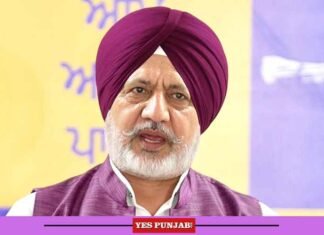
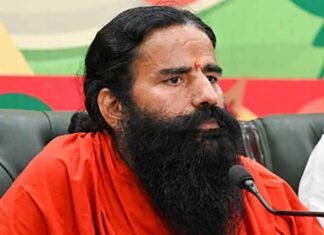
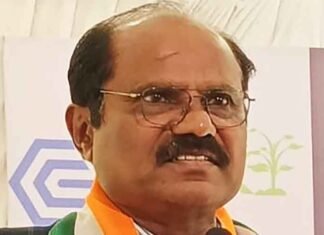
Shiromani Akali Dal Punarn-Surjit president Giani Harpreet Singh has questioned Punjab’s exclusion from the decision-making process surrounding the Kishau Multipurpose Project and called on the Centre to clarify the basis on which Punjab’s interests are being considered in future Upper Yamuna water arrangements.
His statement came after the chief ministers of Himachal Pradesh, Uttarakhand, Uttar Pradesh, Haryana, Rajasthan and Delhi signed an agreement on September 15 for the long-pending Kishau Multipurpose Project. The project is proposed on the Tons River, a major tributary of the Yamuna, and has been declared a national project, with the Centre expected to bear about 90 per cent of its financial burden.
Giani Harpreet Singh said Punjab had not been included among the six participating states and questioned why the state had not been given an opportunity to present its position on new storage projects linked to the Upper Yamuna basin.
He said Punjab was not seeking to take away the existing legal rights of any other state. However, he questioned why Punjab could not be heard on new projects when Himachal Pradesh, which he described as a non-riparian state, was included in the 1994 Upper Yamuna arrangement.
The 1994 Upper Yamuna agreement provided allocations of 5.730 billion cubic metres (BCM) to Haryana, 4.032 BCM to Uttar Pradesh, 1.119 BCM to Rajasthan, 0.378 BCM to Himachal Pradesh and 0.724 BCM to Delhi, according to the figures cited by Giani Harpreet Singh.
He further pointed to the provision in the 1994 agreement concerning a review after 2025 if requested by a basin state. Since that period has now passed, he sought clarification from the Centre on whether the arrangement has been reviewed and, if not, why such a review has not taken place.
The project-specific agreement signed on September 15 follows the broader 1994 Upper Yamuna framework, under which separate agreements were envisaged for storage projects in the basin. The Kishau project is designed with a storage capacity of 1,562 million cubic metres and is expected to irrigate about 97,000 hectares while generating around 1,476 million units of hydropower annually.
Giani Harpreet Singh also questioned whether present-day riparian status is the sole criterion for determining a state’s role in Upper Yamuna arrangements or whether basin, historical, administrative and inter-state considerations are also taken into account.
He argued that the treatment of Ravi-Beas water arrangements showed that inter-state water distribution has historically involved considerations beyond present-day river boundaries. Citing the 1981 arrangement, he said 17.17 million acre-feet (MAF) of surplus Ravi-Beas waters were allocated among Punjab, Haryana, Rajasthan, Delhi and Jammu and Kashmir.
He further referred to developments concerning Himachal Pradesh’s water and power components in the Kishau project. The Himachal Pradesh government has said an understanding was reached in June 2026 under which beneficiary states would bear the cost of the state’s power component, while Himachal Pradesh would receive compensation through the project arrangement.
Giani Harpreet Singh said these developments demonstrated that arrangements concerning water allocation and project costs could be modified through inter-state discussions.
He questioned why Punjab could not similarly be brought into discussions concerning new storage projects and future management of Upper Yamuna waters.
“Punjab is only demanding that wherever new storage projects are affecting the future management of river waters, Punjab’s voice should also be heard,” he said.
He urged the Central Government to make any review of the 1994 Upper Yamuna Agreement public and provide Punjab representatives an opportunity to place their position before the authorities.
Giani Harpreet Singh also called upon the Punjab Government to raise the issue with the Centre and seek an official role for Punjab in future discussions concerning Upper Yamuna policy, new storage projects and water allocation.
He said Punjab’s rights and interests should not be treated as settled or extinguished in any new river-water arrangement without giving the state an opportunity to present its position. He called for uniform, transparent and equitable criteria for determining the participation of states in inter-state river-water arrangements.
The statement was issued to the press by Media In-charge Tajinder Singh Pannu.
 FOLLOW NOW