
Jammu, October 9, 2026 (Yes Punjab News)
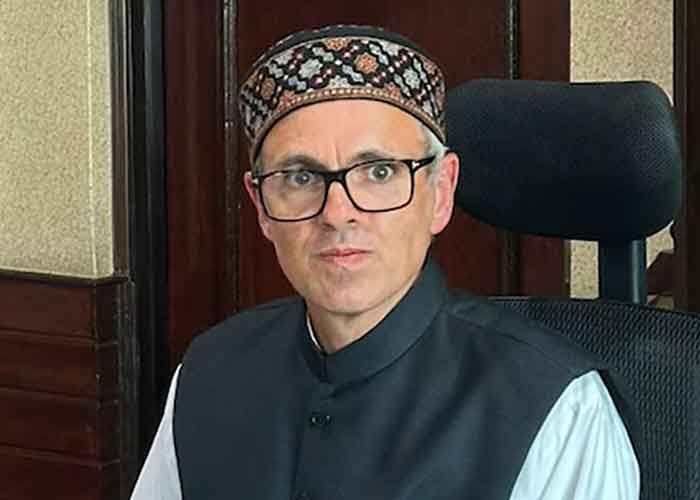
Jammu and Kashmir Chief Minister Omar Abdullah on Friday invited industry leaders to explore the Union Territory as an emerging destination for Global Capability Centres (GCCs), saying the government is committed to building a business-friendly ecosystem that attracts investment, promotes innovation and generates quality employment.
Addressing the inaugural session of the J&K GCC Summit 2026 virtually from New Delhi, Omar Abdullah said Jammu and Kashmir had the potential to compete with Tier 2 and Tier 3 cities across the country by offering an attractive environment for businesses.
“We have to make J&K a place that is competitive, a place that is attractive to do business, a place where you can make money, and a place where we can compete with Tier 2 and Tier 3 cities around the country,” the Chief Minister said.
The two-day summit, themed ‘Unlocking J&K’s GCC Potential for Building Growth Ecosystem and Catalysing Investment’, brings together representatives from government, industry and academia to explore opportunities for expanding the region’s participation in India’s growing GCC ecosystem.
Highlighting the transformation of GCCs in India, Omar Abdullah said these centres had evolved from call centres and business process outsourcing operations into hubs of innovation, talent, capability and enterprise.
“The story of GCCs in India is a story of evolution, as is the story of J&K,” he said, noting that the sector’s development demonstrated how capability-building and value addition could create new economic opportunities.
Drawing a parallel with Jammu and Kashmir’s journey over the past three to three-and-a-half decades, he said the region’s emergence as a potential destination for GCC investment reflected a significant shift in the opportunities available.
The Chief Minister acknowledged that Jammu and Kashmir continued to face perception-related challenges because of its past. However, he said the government was working to address these concerns by encouraging investment across industry, manufacturing, agriculture, tourism and emerging sectors, including GCCs.
He said J&K did not need to replicate the growth models of established GCC hubs such as Hyderabad, Bengaluru and Chennai. Instead, it could learn from their experiences and develop a competitive position among smaller cities.
“Coming late to the party is disappointing, but it is not always disadvantageous. We can learn from the experiences of others. We don’t have to reinvent the wheel. We have to use it better,” he said.
Omar Abdullah also pointed to the rising cost of doing business in major cities, saying it could create opportunities for emerging destinations. Jammu and Kashmir, he said, could build on its inherent advantages to provide an attractive environment for companies looking to establish or expand their operations.
Educational institutions key to retaining local talent
Underscoring the importance of a skilled workforce, the Chief Minister highlighted the presence of prominent educational institutions in the region, including IIM Jammu, IIT Jammu, Shri Mata Vaishno Devi University, the University of Jammu, the University of Kashmir and the Islamic University of Science and Technology.
He said these institutions were producing talented and well-educated young people, many of whom were compelled to seek employment outside Jammu and Kashmir, including in the GCC sector, because of limited opportunities at home.
Establishing GCCs in the region, he said, could help retain local talent, create quality jobs and connect educated youth with emerging opportunities in the technology-driven economy.
Omar Abdullah said the success of the summit should not be judged by an immediate target of setting up a large number of GCCs. Instead, the priority should be to establish a foundation for sustainable growth.
“We’d be quite happy to have one first GCC. One will lead to five. Five will lead to ten. And the story will grow from there,” he said.
He stressed that the government wanted investors to choose Jammu and Kashmir because of its commercial potential rather than out of sympathy for the region’s past challenges. Commercial viability, he said, would remain central to attracting and retaining businesses, as companies would continue operating in a location only as long as it made economic sense.
Government working to improve business environment
The Chief Minister highlighted steps taken to improve the business environment, including the passage of comprehensive Ease of Doing Business legislation during the recent session of the Legislative Assembly. He said the legislation had received the assent of the Lieutenant Governor and had become law.
The legislation was intended to make it easier to conduct business in Jammu and Kashmir, he said, adding that effective implementation on the ground would be crucial. The government would learn from experience and make further improvements wherever necessary.
Describing the summit as an opportunity to learn from industry leaders and established GCC ecosystems, Omar Abdullah said the discussions would help identify measures to make J&K a more attractive investment destination.
He also emphasised the need for sustained engagement with NASSCOM and other industry stakeholders, inviting companies to explore the region’s potential.
Pointing to Jammu and Kashmir’s climatic conditions and connectivity by road, rail and air, he said the region possessed inherent advantages that could be developed into a compelling proposition for businesses considering new locations.
Assuring investors of the government’s support, he said efforts would continue to make it easier for companies to establish operations and run them profitably in the Union Territory.
Expressing hope that the summit would mark the beginning of a long-term partnership between Jammu and Kashmir and the GCC industry, the Chief Minister said emerging technologies could open new opportunities for regions such as J&K.
He thanked participating industry leaders and delegates for their engagement and appreciated IIM Jammu for organising the summit. He expressed hope that the deliberations would lead to tangible outcomes and meaningful investment opportunities.
With participation from around 45 organisations, more than 55 industry leaders and over 300 delegates, the J&K GCC Summit 2026 aims to strengthen engagement among policymakers, industry and academia and identify pathways to translate the region’s potential into investment, innovation, employment and sustainable economic growth.
 FOLLOW NOW