New Delhi, September 23, 2026 (Yes Punjab News)
Ladakh’s political settlement remains unfinished, with negotiations between the Centre and representatives of the Union Territory continuing over its future governance structure, constitutional safeguards and distribution of powers.
When Article 370 was abrogated on August 5, 2019, and the erstwhile state of Jammu and Kashmir was reorganised into two Union Territories, many in Ladakh welcomed the move. The region had long sought Union Territory status, with many residents believing that their interests had been overshadowed by developments in Kashmir.
Climate activist Sonam Wangchuk was among those who welcomed the decision at the time, describing it as the fulfilment of Ladakh’s longstanding demand for greater democratic decentralisation.
However, dissatisfaction subsequently emerged over the absence of a legislature for the new Union Territory, the reduction in Ladakh’s representation in the former Jammu and Kashmir Assembly and concerns over land, employment, culture and environmental protection.
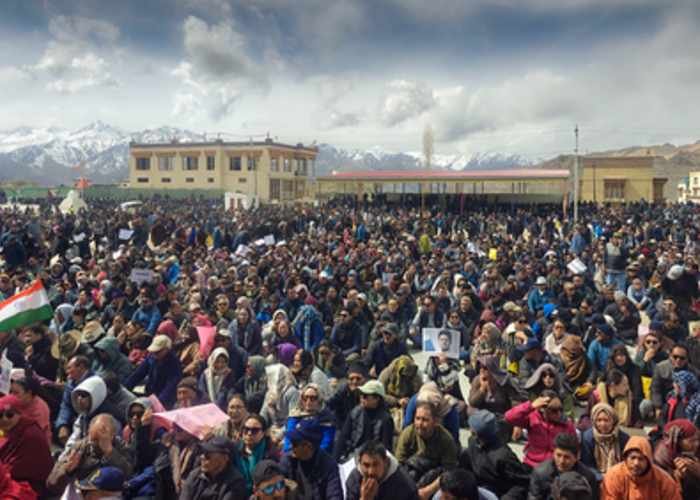
The movement that followed centred on four broad demands: statehood, constitutional safeguards, including protection of land and cultural rights, job reservations and greater parliamentary representation for Leh and Kargil.
The Union Home Ministry subsequently initiated a dialogue process with representatives of the Leh Apex Body (LAB) and Kargil Democratic Alliance (KDA). The negotiations have continued through several rounds.
A significant development came during the September 9 meeting, when the Centre proposed a constitutional provision, Article 371(K), along with a directly elected Union Territory-level body with legislative powers over areas including land, culture and language, forests, environment and natural resources. The exact structure and distribution of powers, however, remain under discussion.
The Centre has also sought detailed responses from the Ladakh representatives on the proposed body’s composition, representation and relationship with the existing autonomous Hill Councils. One of the central unresolved issues is how powers and functions will be divided among the proposed UT-level body, the Hill Councils and local institutions.
Other measures have already been taken during the negotiations, including reservations in government employment, a domicile framework, recognition of five languages and reservation of one-third of Hill Council seats for women.
For sections of Ladakh’s leadership, an elected UT-level body with meaningful legislative, executive and financial powers could provide an interim political framework even if the demand for full statehood remains unresolved.
The negotiations have also been complicated by differences over the pace and substance of the process. Following the September 9 meeting, Wangchuk and other representatives expressed disappointment, while the LAB and KDA said they expected more concrete movement on their core demands. Wangchuk subsequently announced a fresh programme of agitation, including a march in Leh.
This is where the political argument becomes more contentious.
Retired Major General Harsha Kakar, the author of this column, argues that Wangchuk’s approach risks undermining the negotiating process. Kakar contends that the activist has increasingly sought to position himself as the principal face of the Ladakh movement and that renewed agitation could push the region back towards confrontation.
Those are political assessments rather than established findings. Wangchuk and other Ladakh representatives have argued that stronger public pressure is necessary because they believe the Centre has not yet provided adequate assurances on their core demands.
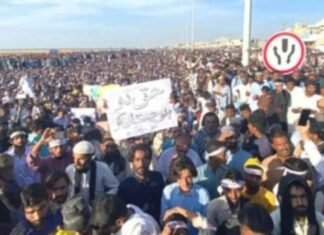
The September 24, 2025 violence remains a major point of contention. Four people were killed and several others injured during protests in Leh last year. Wangchuk was subsequently detained under the National Security Act and spent six months in custody before his release. Current Ladakh representatives continue to seek, among other things, withdrawal of cases arising from the violence and publication of the inquiry report.
Kakar argues that another round of confrontation could delay the institutional changes that Ladakh itself is seeking. He points to the possible impact on elections to local bodies, recruitment and development activities, particularly in the newly created districts.
The broader question, therefore, is not merely whether Ladakh should protest or negotiate. It is whether the region’s competing political voices can maintain a common negotiating position while the Centre works through the constitutional and administrative details of a new governance arrangement.
The latest talks suggest that negotiations have produced areas of in-principle understanding, but the settlement is far from complete. The division of powers between the proposed UT-level institution and the Hill Councils, the scope of legislative and executive authority, representation and constitutional safeguards all still require clarity.
For Ladakh, the immediate challenge is to convert broad political demands into a workable institutional framework that protects its land, culture, environment and local representation while ensuring that governance and development do not remain stalled.
 FOLLOW NOW