
New Delhi, September 16, 2026 (Yes Punjab News)
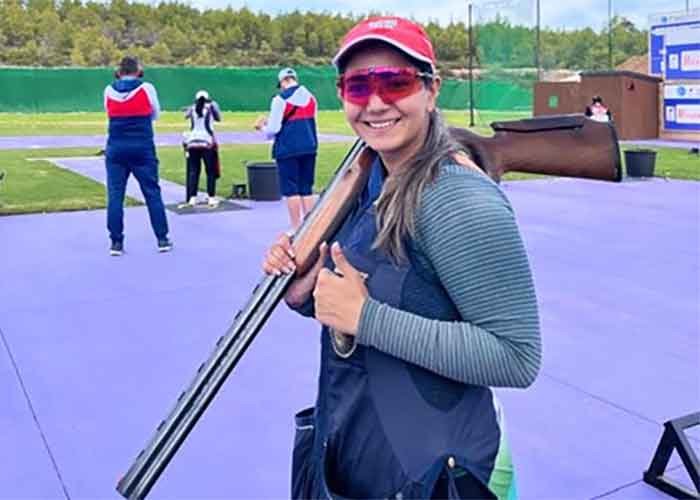
For Aashima Ahlawat, the road to the Asian Games began with a promise at home — excel in academics first, and earn the freedom to pursue shooting later.
The Rohtak native kept her word. At 18, she scored an impressive 98.6 per cent in her Class 12 board examinations. Four years on, the 22-year-old is preparing to make her Asian Games debut at the Aichi-Nagoya 2026.
Ahlawat’s interest in shooting was sparked by India’s performances at the 2018 Commonwealth Games. She initially took up pistol shooting before eventually finding her calling in shotgun events.
“Seeing Manu Bhaker and Heena Sidhu on that stage, I remember thinking, I want to feel that someday,” Ahlawat said, recalling the moment that inspired her to take up the sport.
Coming from a business family with roots in construction, pursuing shooting required a major commitment from her family, particularly her mother. She moved from Rohtak to Delhi to support her daughter’s training and also shifted the family business.
“My mother didn’t just give me permission, she gave up a lot for it,” Ahlawat said. “She moved from Rohtak to Delhi, shifted our family business, just so I could train properly. That’s not something I take lightly.”
Her early days in the sport were not without challenges. It took nearly eight months to arrange her first shotgun and ammunition, but the delays did little to affect her determination.
“A medal is not the only thing that tells you how far you’ve come,” she said. “If something doesn’t go right, I look for the mistake, fix it, and come back stronger.”
That mindset was tested at the 2024 World Championships in Peru, held during the final year of her junior career. A miscalculation on the final target left her fourth, but she responded just weeks later by winning a bronze medal and recording a personal best at the World University Championships in Delhi.
Ahlawat also credits the National Rifle Association of India (NRAI) for supporting her development by providing greater access to training camps, competitions and ammunition.
“NRAI has made things so much easier for shooters like me, the camps, the competitions, even something as basic as steady access to ammunition,” she said.
“People outside the sport don’t realise it, but it changes everything. The exposure I have got through NRAI camps these last two years, I don’t think I would have grown this fast without it,” she added.
As her career progressed, Ahlawat also learned to deal with the mental demands of a sport in which concentration can be decisive. An admitted overthinker, she has developed a simple routine to steady herself before taking aim.
“I focus on my breathing, and honestly, I just play a random song on loop in my head at the station,” she said. “It’s my way of feeling calm and safe in a moment which is otherwise so lonely.”
With her maiden Asian Games appearance approaching in Aichi-Nagoya, Ahlawat is keeping her attention on the immediate task rather than becoming consumed by the prospect of winning a medal.
“My plan is target by target. I don’t want to think about the medal the whole time, I just want to stay present and enjoy the process,” she said.
For Ahlawat, however, the Asian Games represent only the next step in a much larger ambition. She is already looking ahead to a return to the national team and, ultimately, an opportunity to compete at the Olympics.
“The next big goal for me is to make the team again, earn an Olympic quota, and give my best at the Olympics. That’s the dream I’m chasing now.”
 FOLLOW NOW