
New Delhi, November 2, 2026 (Yes Punjab News)
The Federation of Indian Pilots (FIP) has sought Prime Minister Narendra Modi’s intervention over what it described as an “increasingly disturbing pattern” of helicopter accidents in India, particularly in the Himalayan region and other high-altitude areas.
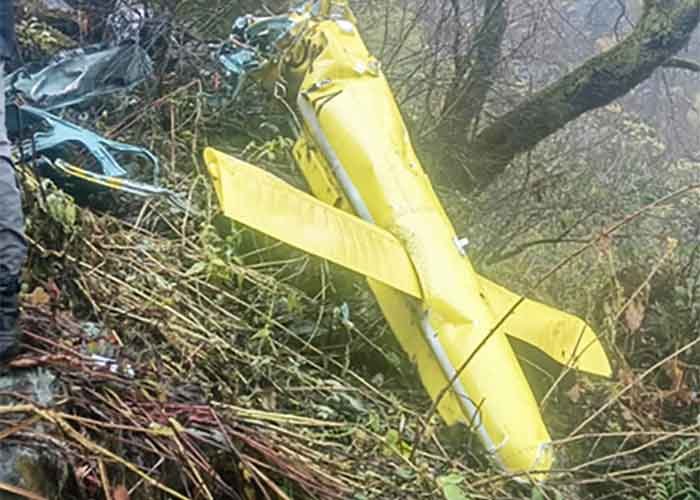
In a letter to the Prime Minister, the FIP cited the October 30 helicopter crash in Uttarakhand’s Chamoli district, near Joshimath, which claimed the lives of all six occupants. It said the recurrence of such accidents raised concerns over operational procedures, pilot training, weather assessment, terrain clearance, helipad infrastructure, operator oversight and safety management systems.
The federation urged the Ministry of Civil Aviation and the Directorate General of Civil Aviation (DGCA) to undertake a comprehensive review of helicopter operations, especially in hilly areas. It also referred to the 380th Report of the Parliamentary Standing Committee on Transport, Tourism and Culture, submitted in August 2025, which flagged concerns following accidents during high-risk Char Dham Yatra operations.
Highlighting risks in the Kedarnath sector, the FIP said operations take place in mountainous terrain with narrow, steep valleys at altitudes of 8,000-12,000 feet, classified as a “Hostile Environment” under DGCA norms. It pointed out that safe forced landings are not possible because of the lack of suitable landing areas.
The letter also flagged helipads with unidirectional approach and take-off funnels, saying the required minimum 150-degree separation between landing and take-off funnels was not available or followed at most locations. As a result, helicopters often operate in tailwind conditions during take-off or landing, posing risks because of limited engine power margins and reduced controllability at high altitudes.
The FIP noted that helicopters used for Char Dham operations are single-engine, Performance Class 3 aircraft, capable only of Visual Flight Rules (VFR) operations and generally flown by a single pilot. They are not equipped with autopilot or weather radar. It warned that an engine failure during flight would require a forced landing, which may not be possible in the hostile terrain.
The federation stressed that helicopter operations differ significantly from fixed-wing airline operations, involving low-level flying, confined landing sites, rapidly changing weather and proximity to terrain and obstacles. It also cited mountain waves, downdrafts, turbulence, wind shear and restricted visibility as additional hazards in the Himalayan region.
 FOLLOW NOW