
New Delhi, October 24, 2026 (Yes Punjab News)
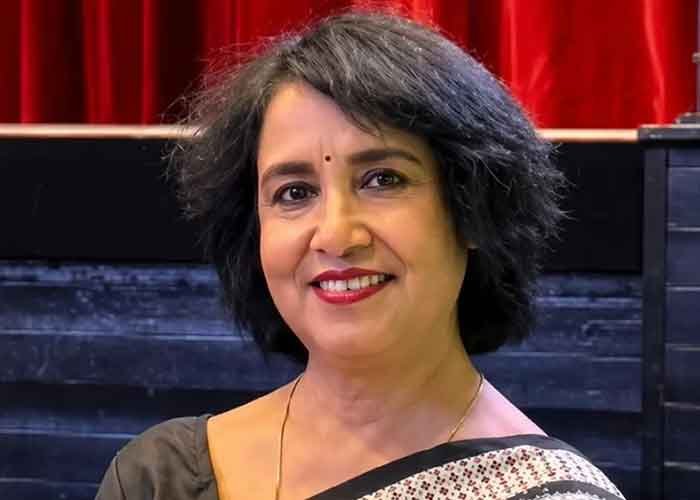
Swedish author and activist Taslima Nasrin has reignited debate over censorship, book bans and the repression of writers under Communist regimes, drawing attention to historical cases across several countries amid controversy over the alleged vandalism of Left Front bookstalls in West Bengal during the recently concluded Durga Puja celebrations.
The incidents have triggered political reactions in the state, with the Opposition holding the Bharatiya Janata Party (BJP) responsible for the attacks, while several leaders from the ruling party have also condemned the alleged vandalism.
In a post written in Bengali on Facebook on Friday, Nasrin argued that book bans, book burnings and the silencing of writers had been recurring features of Communist rule in different parts of the world.
“Banning books, burning books, silencing writers — isn’t that in the history of Communists? It is,” she wrote, adding that such incidents had taken different forms, ranging from party-led attacks and government bans to imprisonment, forced labour and exile.
Nasrin said her list was not exhaustive but maintained that each incident was supported by documentation. She called for such cases to be examined with reference to the countries, political parties, rulers and periods involved.
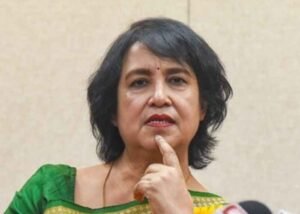
Nasrin recalls ban on her own book in West Bengal
At the sixth position on her list, Nasrin cited the controversy surrounding one of her own works, which she said was banned and confiscated by the Left Front government in West Bengal led by then Chief Minister Buddhadeb Bhattacharjee on the grounds that it offended religious sentiments.
According to the account she shared, the first government notification banning the book was issued on November 27, 2003, followed by another notification on April 30, 2004. The Calcutta High Court lifted the ban on September 22, 2005.
Nasrin also recalled the events of November 2007, alleging that then CPI(M) state secretary Biman Basu said she should leave West Bengal if her presence threatened peace. She said she was expelled from the state the following day, November 22.
Soviet-era repression and writers in exile
Nasrin began her historical account with Russian Nobel laureate Aleksandr Solzhenitsyn, who faced imprisonment and labour camps before spending years in enforced exile after criticising Joseph Stalin.
Her list also included writers Varlam Shalamov, Osip Mandelstam and Yevgenia Ginzburg, who faced persecution or imprisonment in the former Soviet Union.
She cited works such as Yevgeny Zamyatin’s We and Boris Pasternak’s Doctor Zhivago as examples of literature subjected to censorship or suppression.
Nasrin also referred to Andrei Sinyavsky and Yuli Daniel, who were tried on anti-Soviet charges over the publication of satirical literature and sentenced to forced labour. She argued that repression of writers continued even after Stalin’s death.
“This happened long after Stalin’s death. The State’s oppression of writers did not stop just because Stalin was gone,” she wrote.
Censorship in Czechoslovakia, China and Vietnam
The author also highlighted the treatment of Czech writer Milan Kundera following the Soviet-led invasion of Czechoslovakia in 1968. According to her account, his books were banned, he lost his job and was placed under police surveillance before moving to France in 1975.
Nasrin cited playwright and dissident Václav Havel as another example, saying the legal publication and staging of his play The Conspirators had been blocked under Communist rule. She also noted that his works were banned in schools and government libraries in 1971.
Turning to China, Nasrin referred to Jung Chang’s Wild Swans, which recounts the experiences of three generations of women in her family, including the impact of Mao-era rule and the Cultural Revolution. She said the book was banned in mainland China.
She also mentioned Vietnamese writer Duong Thu Huong, alleging that her novel Paradise of the Blind was effectively banned under Communist rule. Nasrin said Huong was expelled from the Communist Party after advocating human rights and democratic reform and was imprisoned without trial in 1991.
Nasrin rejected the suggestion that a writer’s past association with a political movement should determine their right to criticise it.
China and Cuba also feature in the list
Nasrin included Cuban poet Heberto Padilla, whose poetry collection received an award in 1968 but was subsequently criticised by the organisation’s leadership as “counter-revolutionary”.
She also cited Chinese dissident Liu Xiaobo, who played a key role in drafting Charter 08, a manifesto calling for human rights and political reform in China. Nasrin noted that Liu was arrested and sentenced to 11 years in prison in 2009.
Her account further referred to the destruction of books and libraries during China’s Cultural Revolution, when Mao-backed Red Guards targeted what they considered remnants of the country’s old culture from 1966 onwards.
She also mentioned book-burning incidents attributed to sections of the Maoist movement in West Bengal around 1970-71.
Allegations of attempts to erase history
Towards the end of her post, Nasrin referred to alleged efforts to destroy books and libraries in West Bengal and the former Soviet Union. She also cited orders to remove pages from editions of the Great Soviet Encyclopedia following the fall and execution of Soviet security chief Lavrentiy Beria.
Nasrin argued that the latter episode was not merely an act of street-level vandalism but an attempt to alter the historical record through state-directed changes to published material.
Concluding her post, Nasrin called for freedom of expression to be defended consistently, regardless of political affiliations.
“Protesting book burning, bans, or imprisoning or exiling writers shouldn’t depend on party colours,” she wrote, adding that freedom of speech could not be defended by demanding freedom for favoured books while supporting censorship of others.
Her remarks have brought renewed attention to historical cases of censorship and repression, as the political controversy over the alleged vandalism of Left Front bookstalls continues in West Bengal.
 FOLLOW NOW