

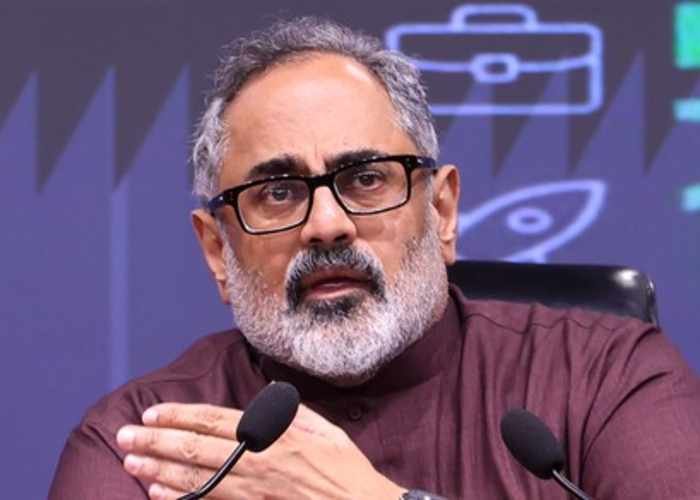
Kerala BJP president Rajeev Chandrasekhar has defended India’s security clearance requirements for satellite communication services in a public message addressed to billionaire Elon Musk, stressing that national interests must take precedence as the country adopts new technologies.
Responding to the debate over the rollout of Musk’s Starlink satellite Internet service in India, Chandrasekhar said all three satellite communication service providers were broadly at the same stage of securing security clearances. He maintained that safety and trust had to be verified before spectrum could be allocated.
“A country has to plan for itself and its interests before every new choice. That’s what India is doing. Patience is unavoidable and in this case is a necessity,” Chandrasekhar wrote on X.
Drawing on his experience as a telecom entrepreneur and former policymaker, he said India’s technology sector, including telecommunications and the Internet, was guided by three principles under Prime Minister Narendra Modi: openness, safety and trust, and accountability.
He called for an environment free from monopolies and duopolies, with fair competition and infrastructure that could be trusted. He also argued that all participants in the sector should be legally accountable for maintaining safety and trust.
Chandrasekhar highlighted security concerns surrounding satellite communications, referring to the 26/11 Mumbai terror attacks and the Pahalgam attack. He said satellite communication had been a preferred means of communication for terrorists and pointed to additional challenges posed by satellite-based voice-over-Internet services and encryption.
He said these challenges could be addressed but would require new capabilities and capacity to ensure security.
Acknowledging Starlink’s technological potential, Chandrasekhar said he had used the service and described it as an impressive technology representing a new era in mobility innovation.
He clarified that he was no longer in government and was not speaking on its behalf, while reiterating that India needed to protect its interests as it assessed emerging technologies.
The exchange comes amid wider discussion over regulatory approvals and security requirements for satellite-based Internet services in India.
 FOLLOW NOW