Bengaluru, September 22, 2026 (Yes Punjab News)
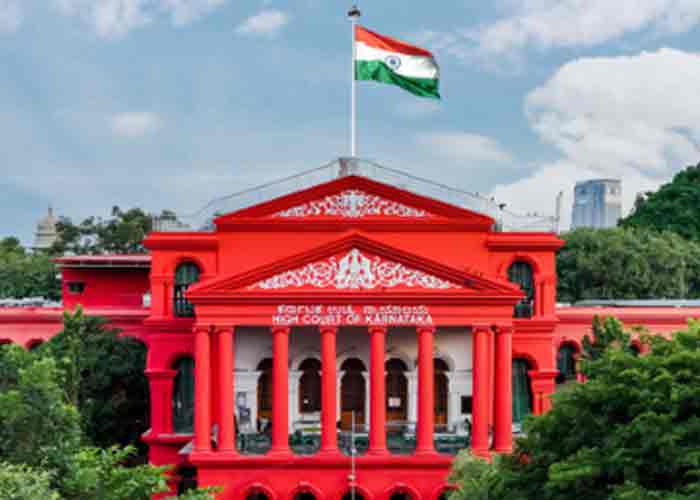
The Karnataka High Court on Tuesday heard a Public Interest Litigation (PIL) filed by senior counsel and activist Girish Bharadwaj challenging the state government’s decision regarding the singing of Vande Mataram at government events.
A Division Bench comprising Justice Anu Shivaraman and Justice T.P. Vivekananda heard the matter. Senior advocate Angad Kamath appeared for the petitioner, while Advocate General Shashi Kiran Shetty represented the Karnataka government.
Arguing for the petitioner, Kamath contended that matters concerning the National Anthem and National Song are governed by the Union government and cannot be independently altered by state governments.
He submitted that the Union Home Ministry has issued notifications prescribing the manner in which the National Anthem and National Song should be sung. According to the petitioner, Vande Mataram comprises six stanzas and its prescribed rendition takes around 3.10 minutes. He also argued that the Centre has issued guidelines regarding its rendition.
Kamath further alleged that the Karnataka Cabinet’s decision to curtail the rendition suffered from procedural lapses. He claimed that no department had formally proposed shortening the song and that the Cabinet decision was taken without a proper Cabinet note or supporting document.
The petitioner’s counsel also argued that national symbols, including the National Emblem and National Anthem, fall within the Union government’s domain and that state governments cannot prescribe separate rules.
Opposing the PIL, Advocate General Shashi Kiran Shetty questioned the circumstances in which it was filed, pointing out that the petitioner made the submission on a holiday and approached the court the following day.
Shetty also referred to proceedings before the Supreme Court concerning Vande Mataram and submitted that the Centre had stated that singing the National Song was not compulsory, unlike the National Anthem. He argued that singing the entire Vande Mataram was not mandatory and that only two stanzas have generally been sung on such occasions since 1932.
The Advocate General also referred to a communication from the Union government’s Joint Secretary to state Chief Secretaries, which, according to him, specified occasions for singing the song and referred to two stanzas being sung at state government events.
Shetty further alleged that Bharadwaj had made an incorrect statement in his affidavit by claiming that he was not associated with any organisation. He alleged that the petitioner had links with a political party and argued that political considerations were behind the PIL.
Kamath rejected the contention, maintaining that Vande Mataram is recognised as the National Song. He argued that the Supreme Court had not prescribed the number of stanzas to be sung and had dealt with the issue of showing respect when the song was played.
He further submitted that the Centre should clarify the number of stanzas to be sung and that state governments should follow its directions. According to the petitioner, the Centre’s instructions were not merely advisory.
The arguments come amid a wider controversy over the Karnataka government’s decision to restrict the rendition of Vande Mataram at official events to two stanzas.
Union Education Minister Pralhad Joshi has warned that the BJP would raise the issue in Parliament against the Karnataka government. On Monday, BJP and JD(S) MLAs sang the full version of Vande Mataram inside the Karnataka Legislature, in defiance of the state government’s directive restricting the rendition to two stanzas.
 FOLLOW NOW