
New Delhi, August 10, 2026 (Yes Punjab News)
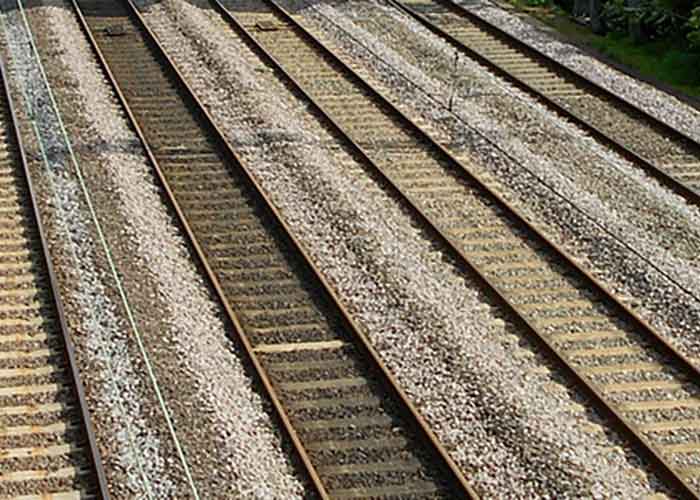
Russia’s proposal to explore an alternative railway corridor connecting the country with the Indian Ocean through Central Asia, Afghanistan and Pakistan could reshape Eurasian trade routes, but the ambitious plan faces major geopolitical, security, financial and engineering challenges.
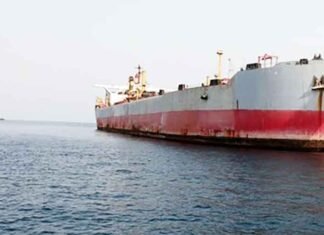
The proposal has gained attention amid concerns over the safety of maritime shipping through the Strait of Hormuz due to the ongoing US-Israel-Iran conflict. Russia’s Deputy Prime Minister Marat Khusnullin has reportedly suggested exploring alternative transport routes to maintain access to South Asian markets and reduce dependence on vulnerable maritime chokepoints, including the Strait of Hormuz and the Bosphorus.
The proposed route would run through Turkmenistan, Iran, Afghanistan and Pakistan before reaching the Indian Ocean. It could provide Russia with an alternative pathway for transporting commodities such as oil, gas, fertilisers and industrial goods to South Asia and beyond.
The corridor could also have implications for China’s Belt and Road Initiative (BRI), particularly the China-Pakistan Economic Corridor (CPEC), which connects western China with the Arabian Sea through Pakistan’s Gwadar Port. A parallel Russian route through Afghanistan and Pakistan could potentially provide an alternative to China-backed infrastructure networks.
Russia’s emphasis on connectivity with India is also significant, as New Delhi has stayed outside the BRI, citing sovereignty concerns over CPEC. A Russian-backed corridor could therefore offer India another option for Eurasian trade connectivity.
At the same time, the proposed route could complement the International North-South Transport Corridor (INSTC), a roughly 7,200-km multimodal network linking India, Iran, Russia, Azerbaijan, Central Asia and Europe. Integrating an Afghan route with the INSTC could create additional connectivity and potentially overlap with Chinese infrastructure interests, particularly in Iran.
Moscow and Beijing also share an interest in reducing dependence on Western-controlled maritime routes. Cooperation between the two could allow greater coordination of infrastructure, trade and logistics while helping both countries mitigate the impact of Western sanctions and restrictions.
However, security remains one of the biggest obstacles. Afghanistan continues to face instability, while tensions along the Afghanistan-Pakistan border and political turmoil and militancy inside Pakistan could disrupt construction and operations.
The project would also have to overcome Western sanctions affecting Russian financing and international cooperation. Difficult terrain, limited existing railway infrastructure and high construction costs add to the engineering and financial challenges.
For India, which has held discussions with Russia on railway cooperation, including modernisation and signalling systems, a route passing through Pakistan would raise additional security and reliability concerns.
The viability of the proposed corridor will ultimately depend on regional stability, financing, infrastructure development and the ability of Russia, China, India and other stakeholders to reconcile competing strategic interests in Eurasian connectivity.
 FOLLOW NOW